THE DAY OF LAUNCHING
下水那天
下水那天
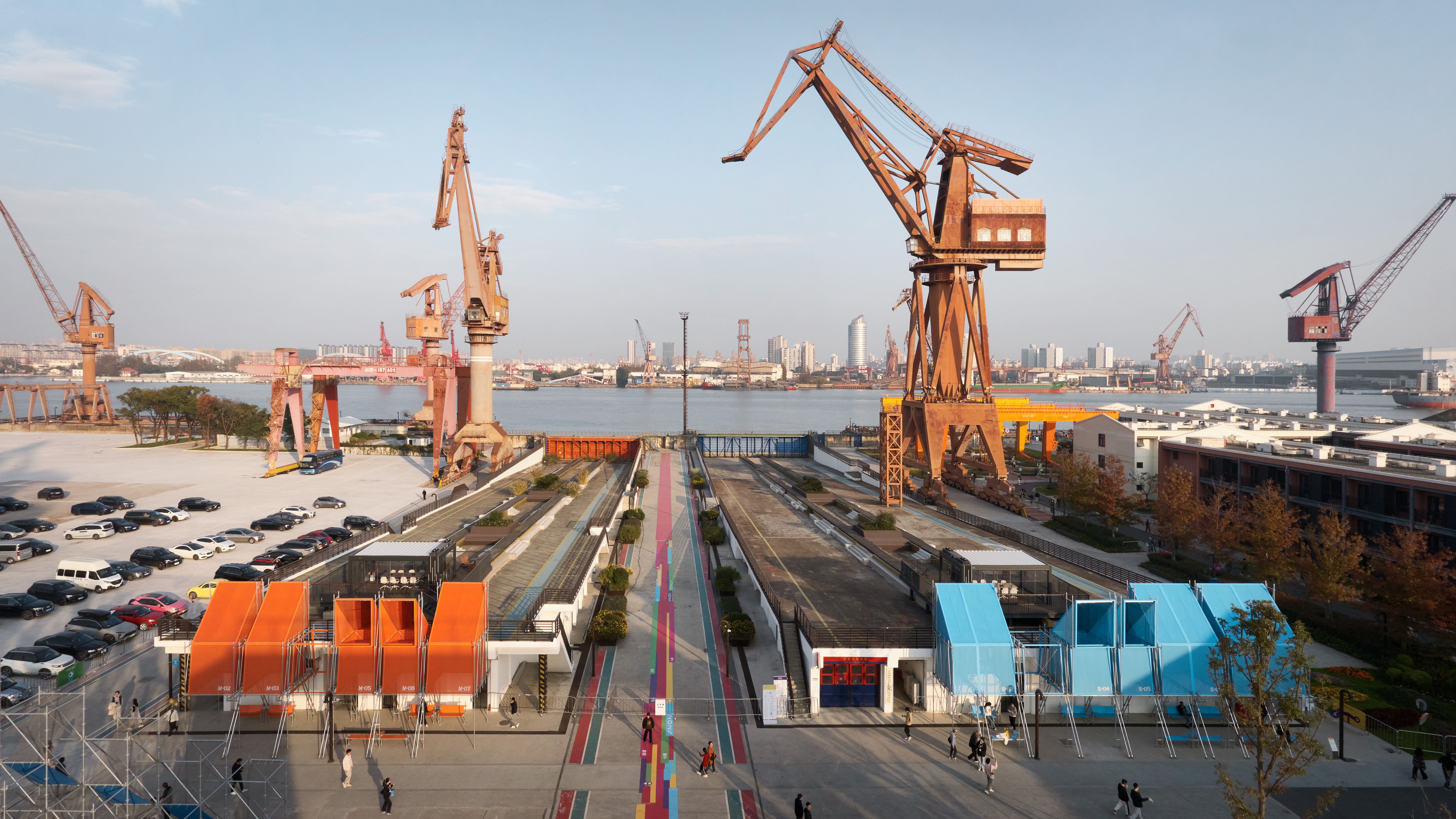
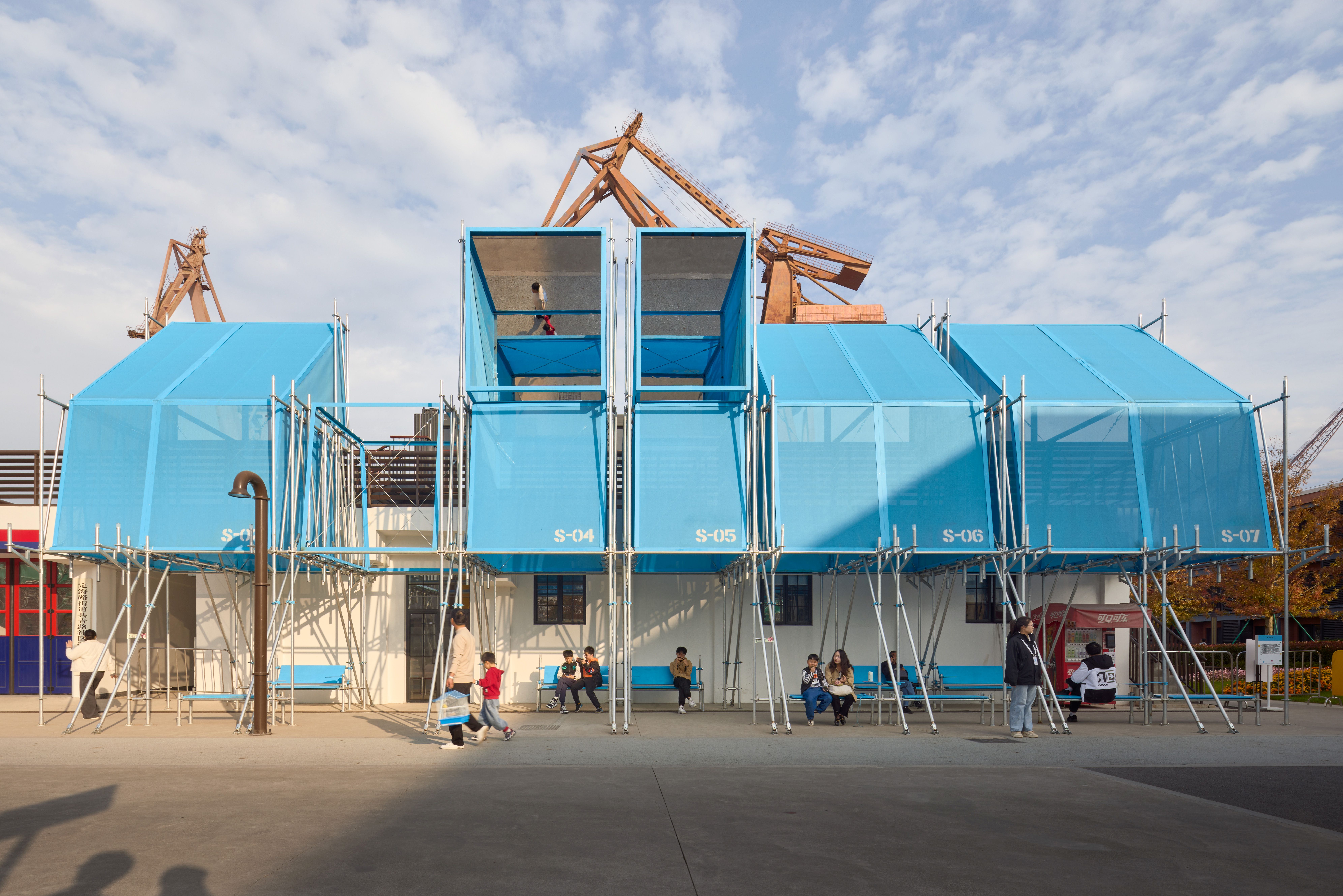
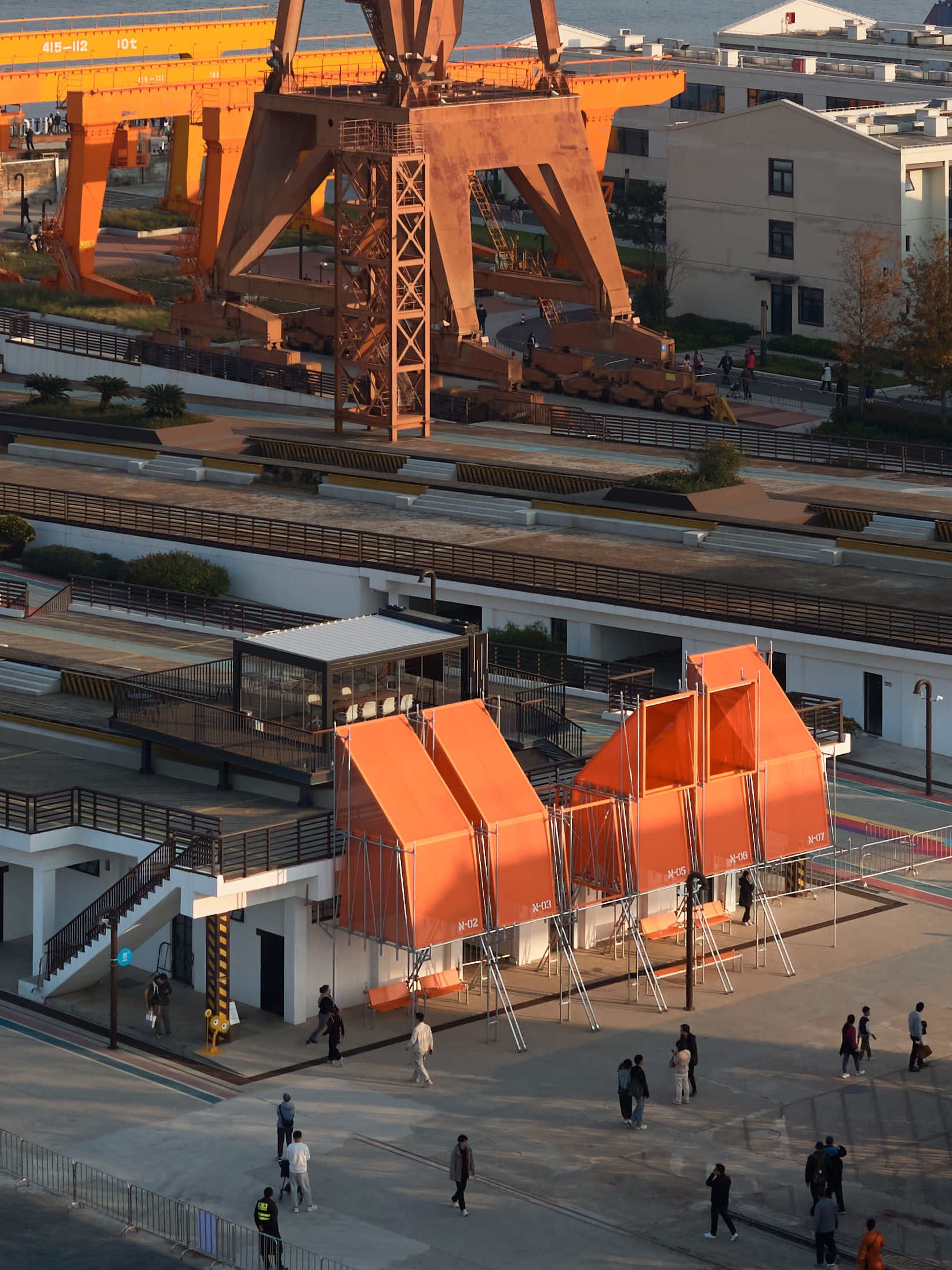
As an installation for SUSAS 2025 (Shanghai Urban Space Art Season), this project is situated on Fuxing Island, Shanghai—once the former China Shipbuilding Factory, which relocated across the Huangpu River in the early 2000s. The client initially asked for an intervention to enhance the slipway's exposed elevation. Yet on site we realized the slipway is more than a façade: it traces the site's central axis and, more importantly, was the final stage where ships were assembled and launched. Rather than a surface upgrade, the project begins by activating a larger imagination embedded in the scale and memory of the place.
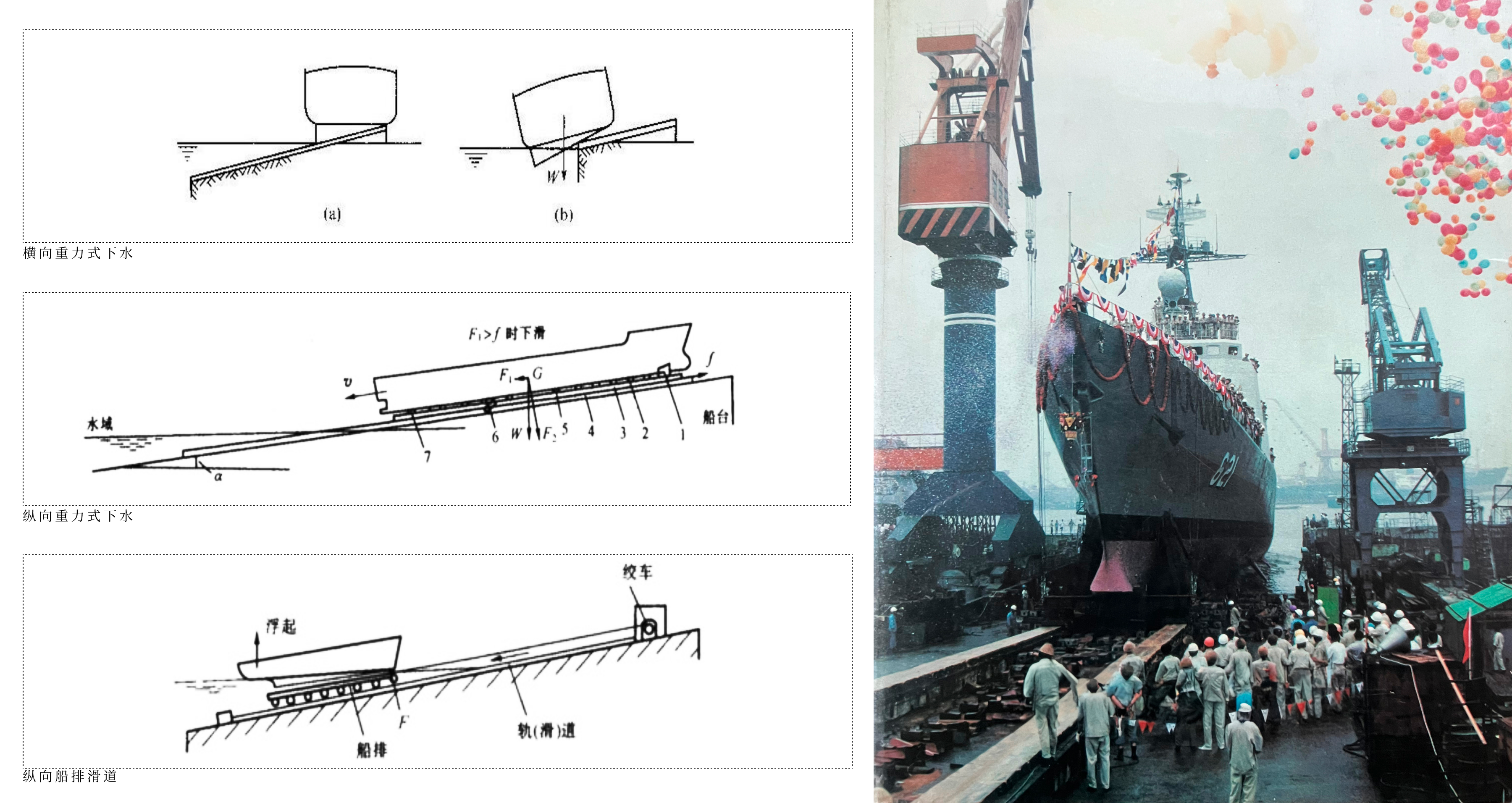
"Launching" marks the final act of shipbuilding—an evolving critical technique, and often the shipyard's most tense yet ceremonial moment. It is a test of precision and craft maturity, but also the release point of months, even years, of workers' commitment and expectation. In the 1970s, the workers' writing collective at the China Shipbuilding Factory compiled a volume titled The Day of Launching, capturing the surge of space and emotion as laborers witnessed a vessel meet the river. These words do more than describe a spectacular instant; they crystallize a distinctive bond between people, machines, and the waterway that carries them.
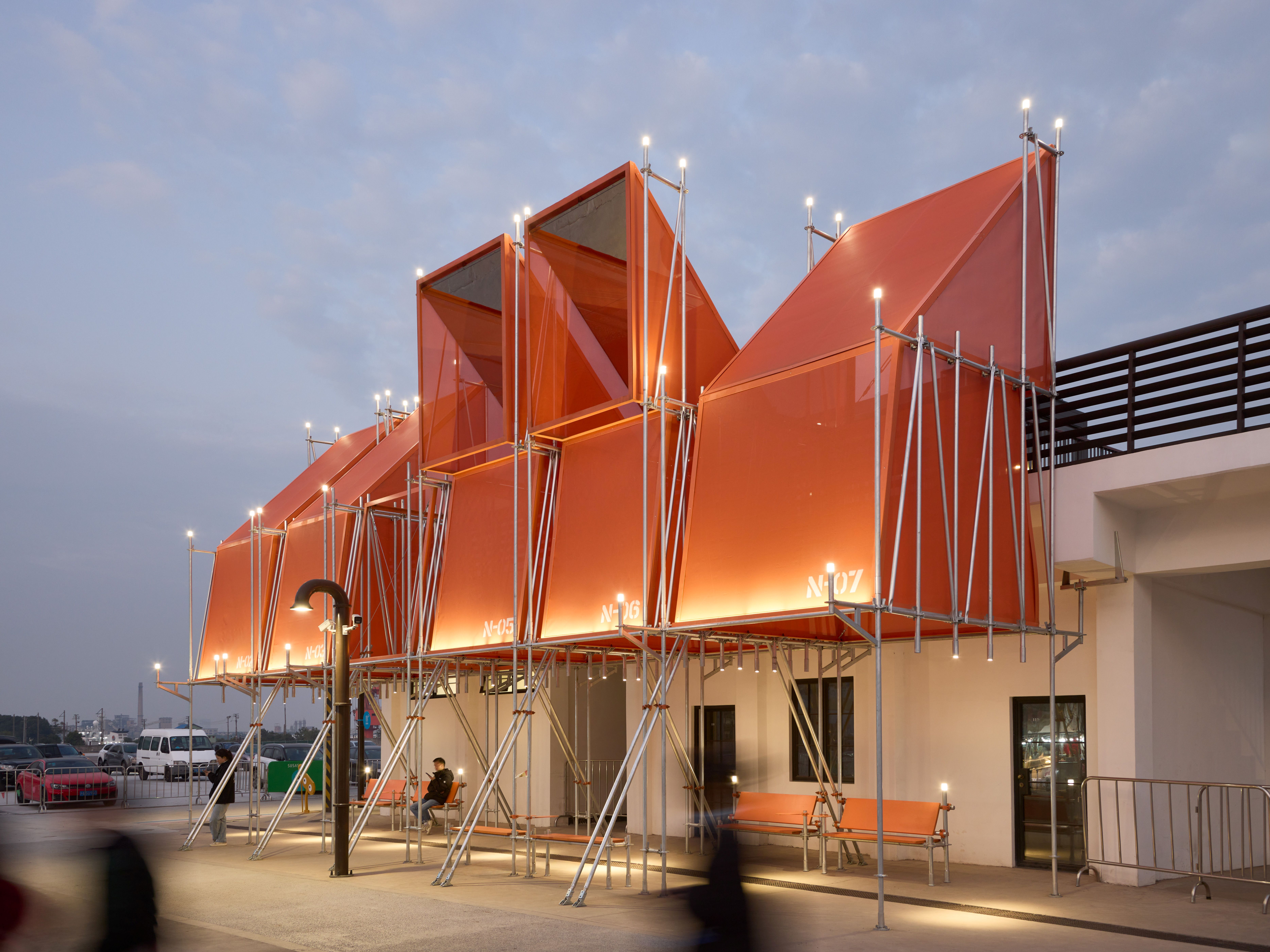
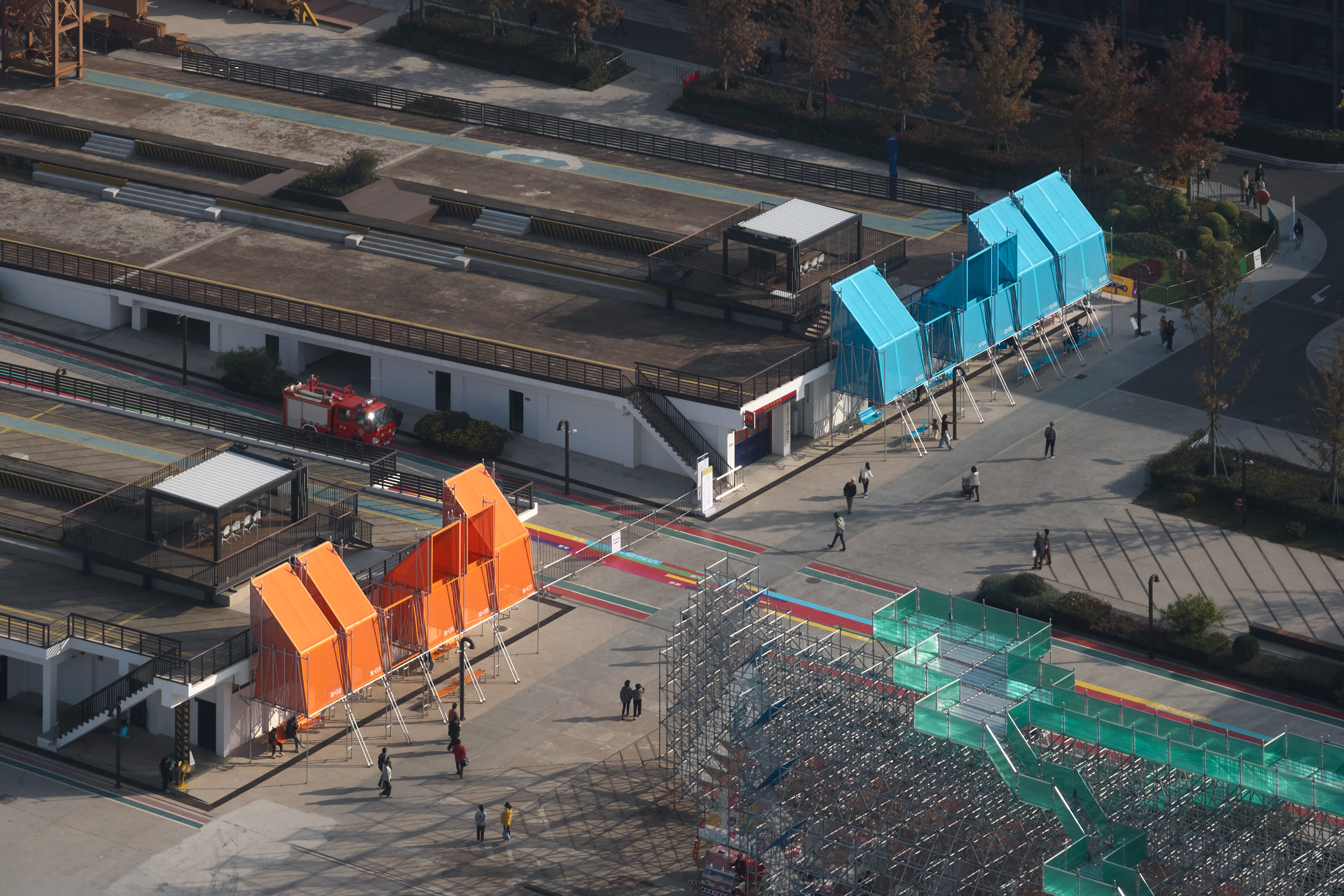
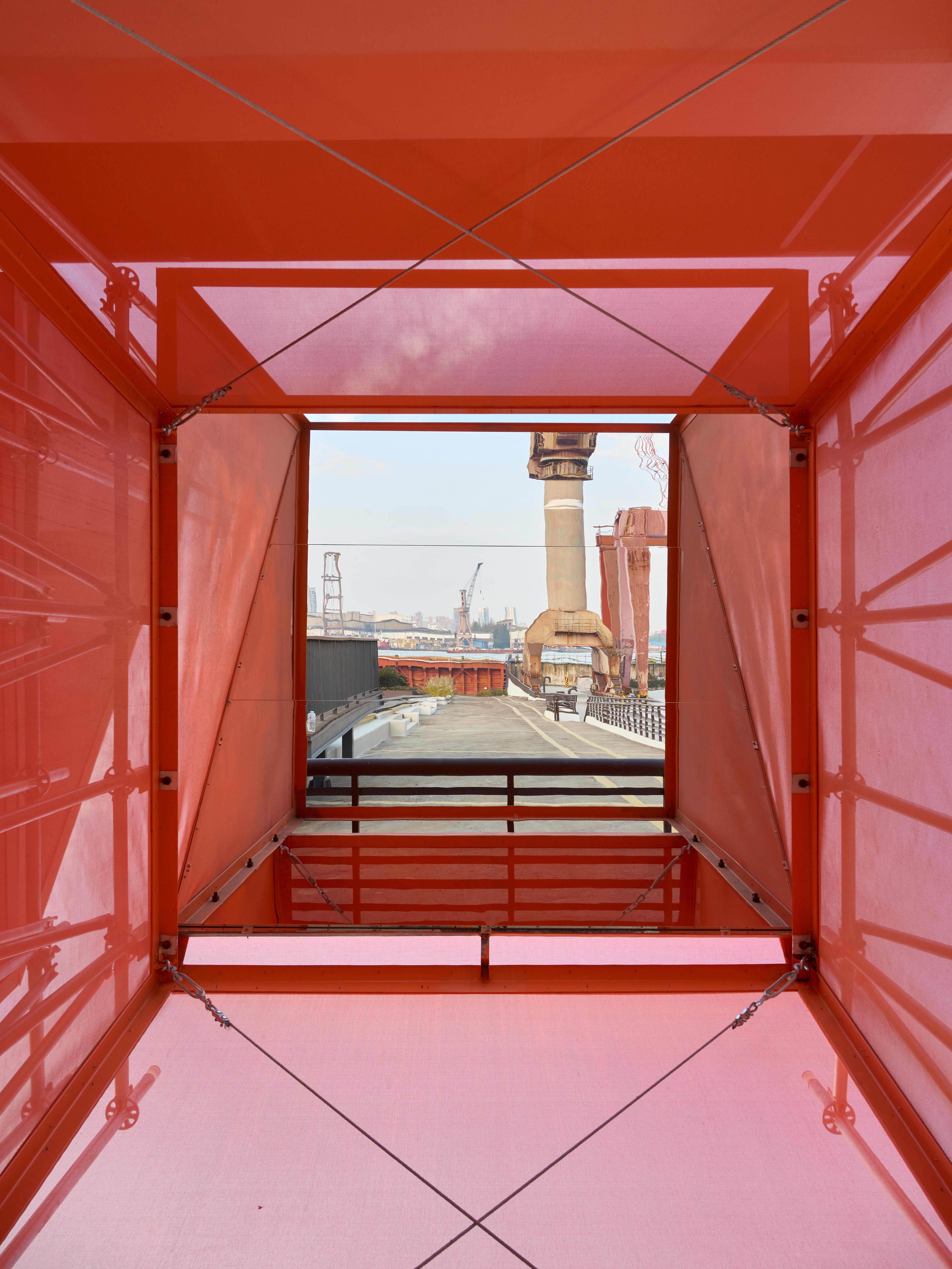
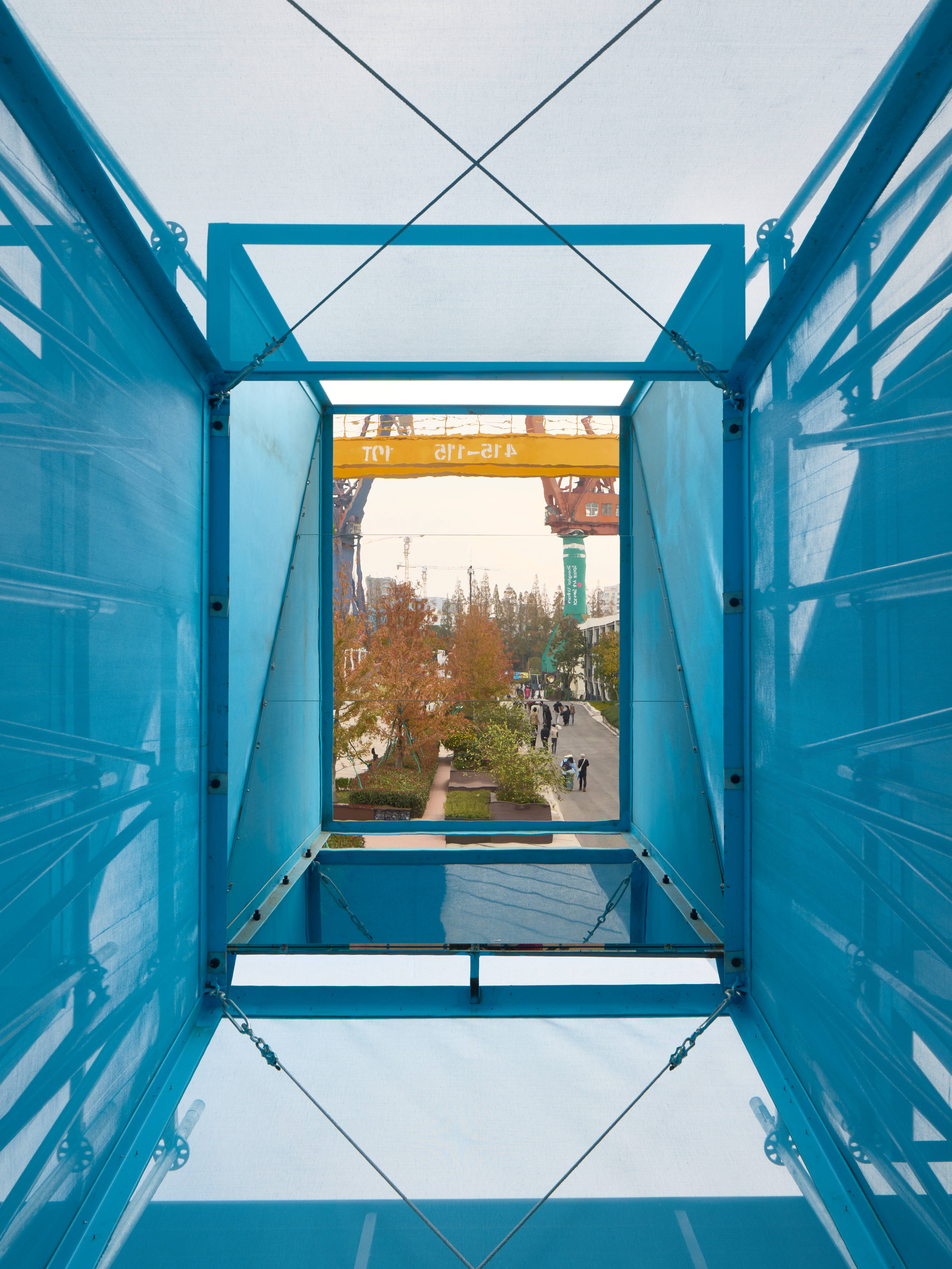
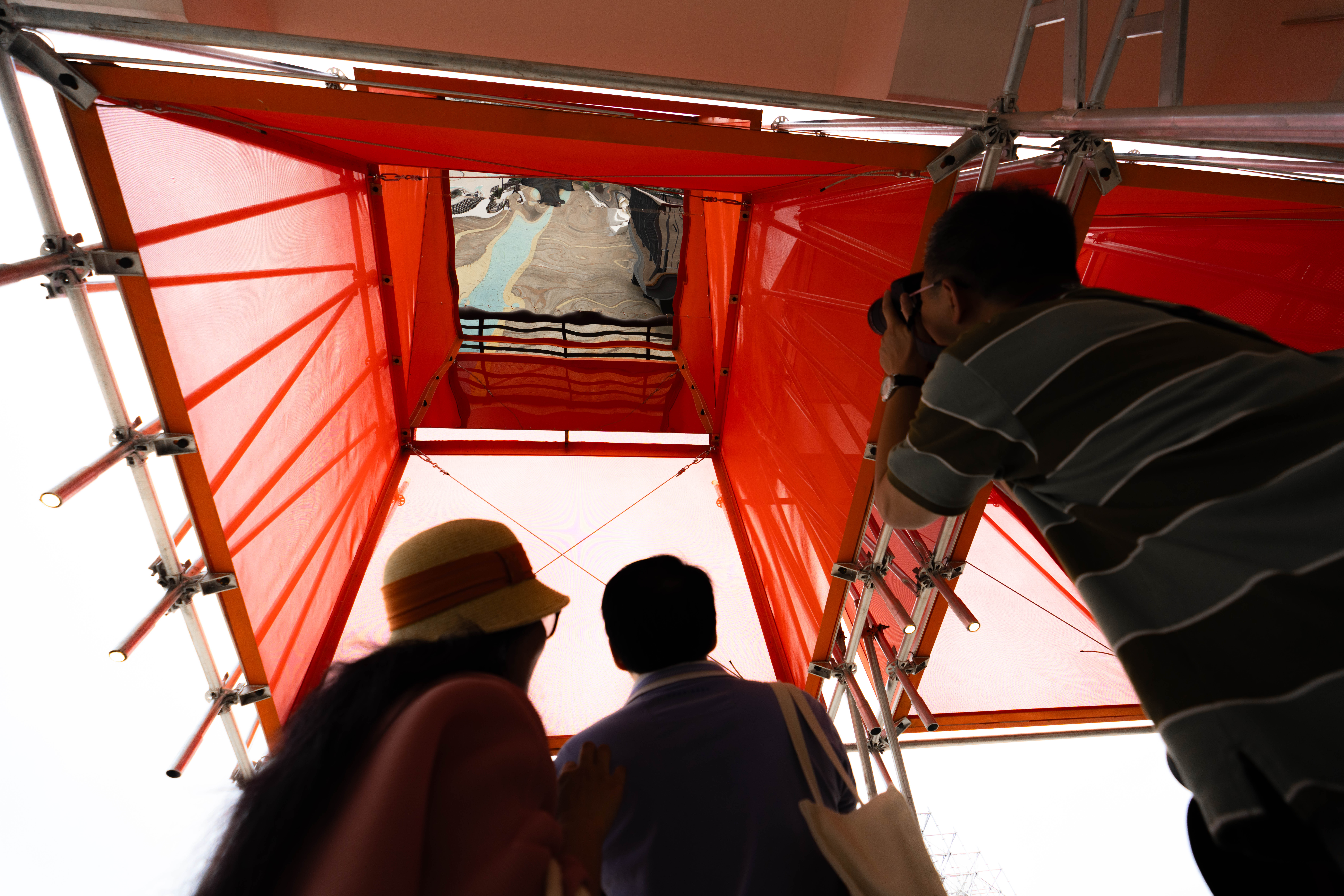
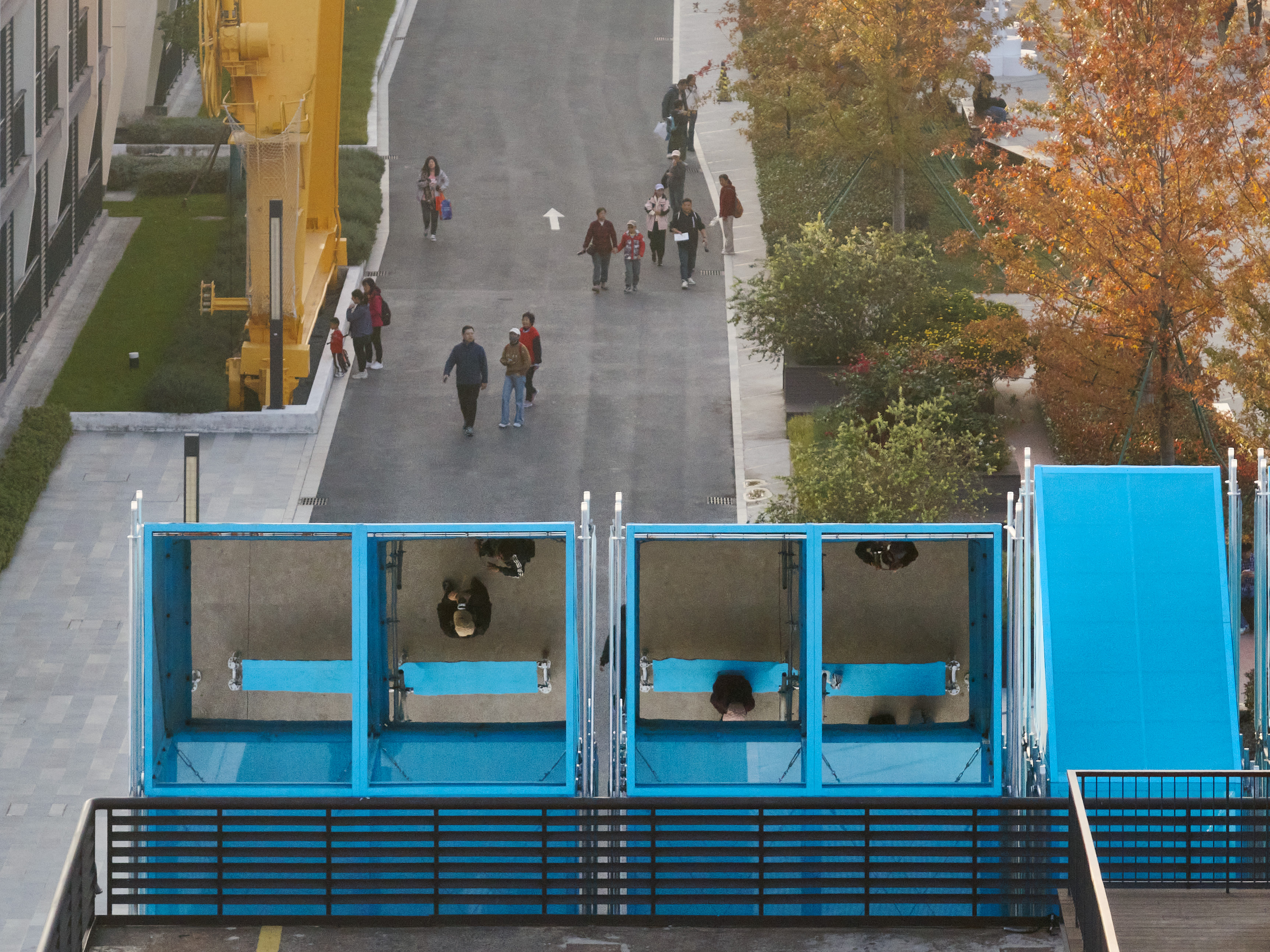
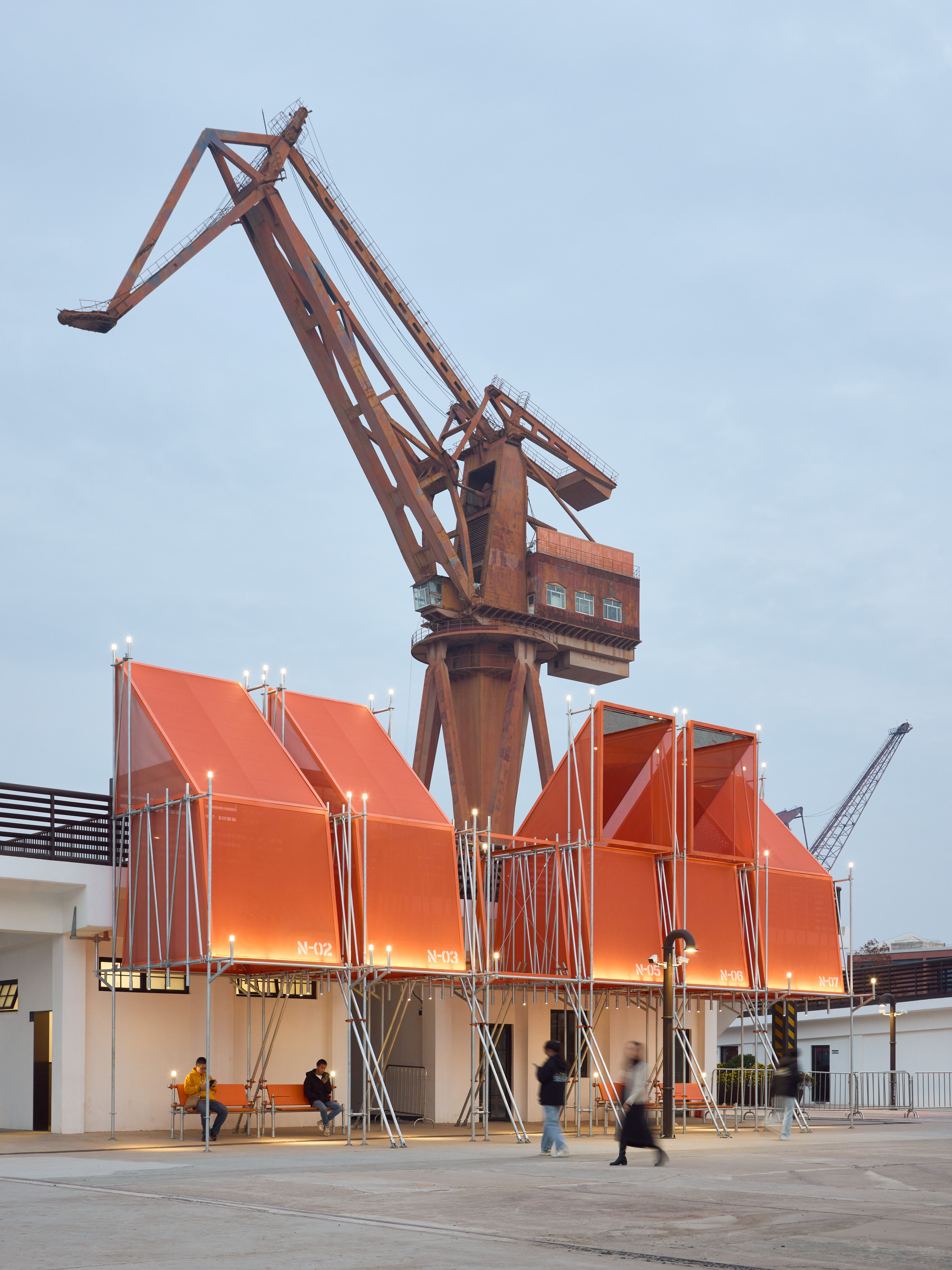
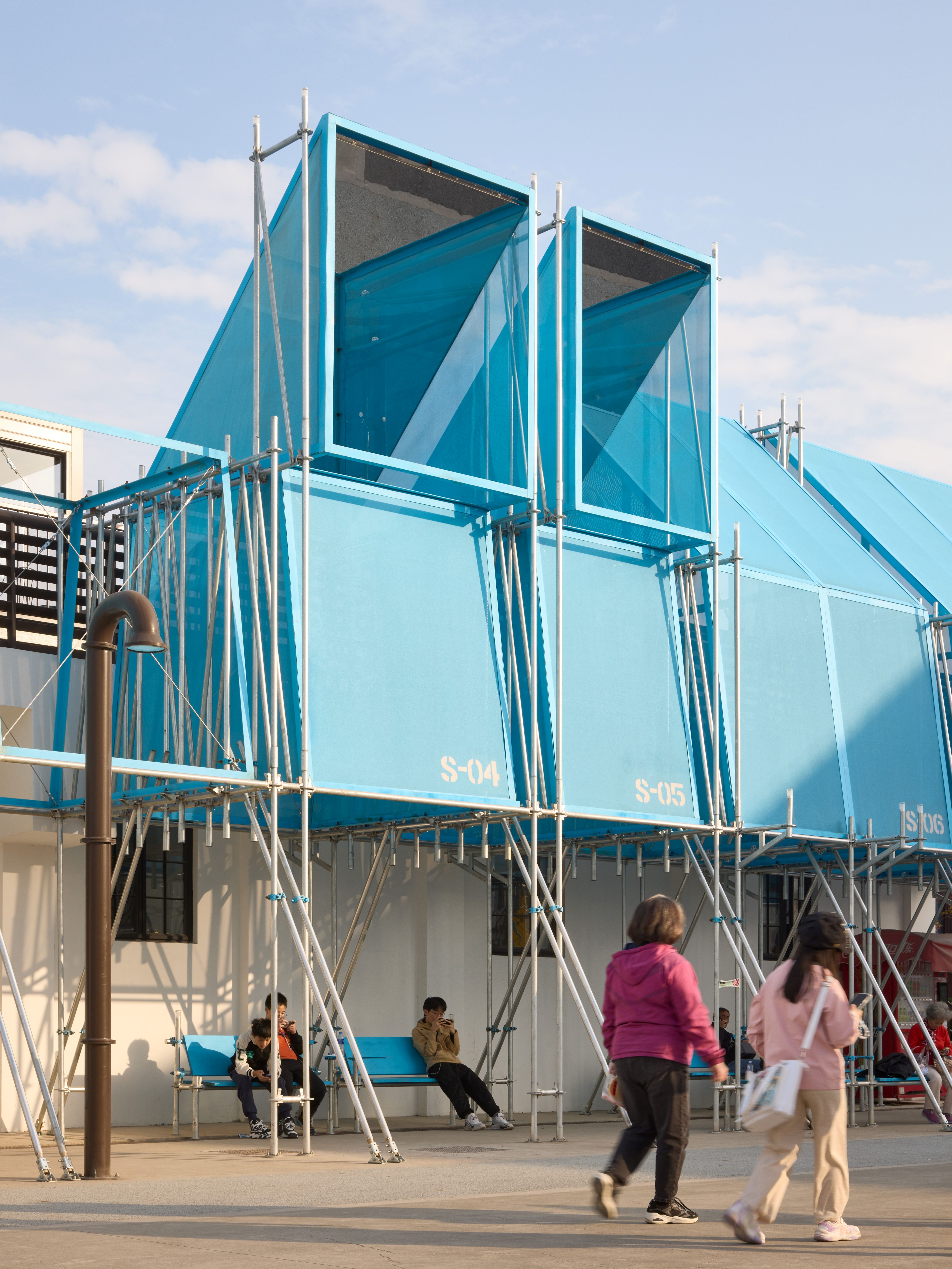
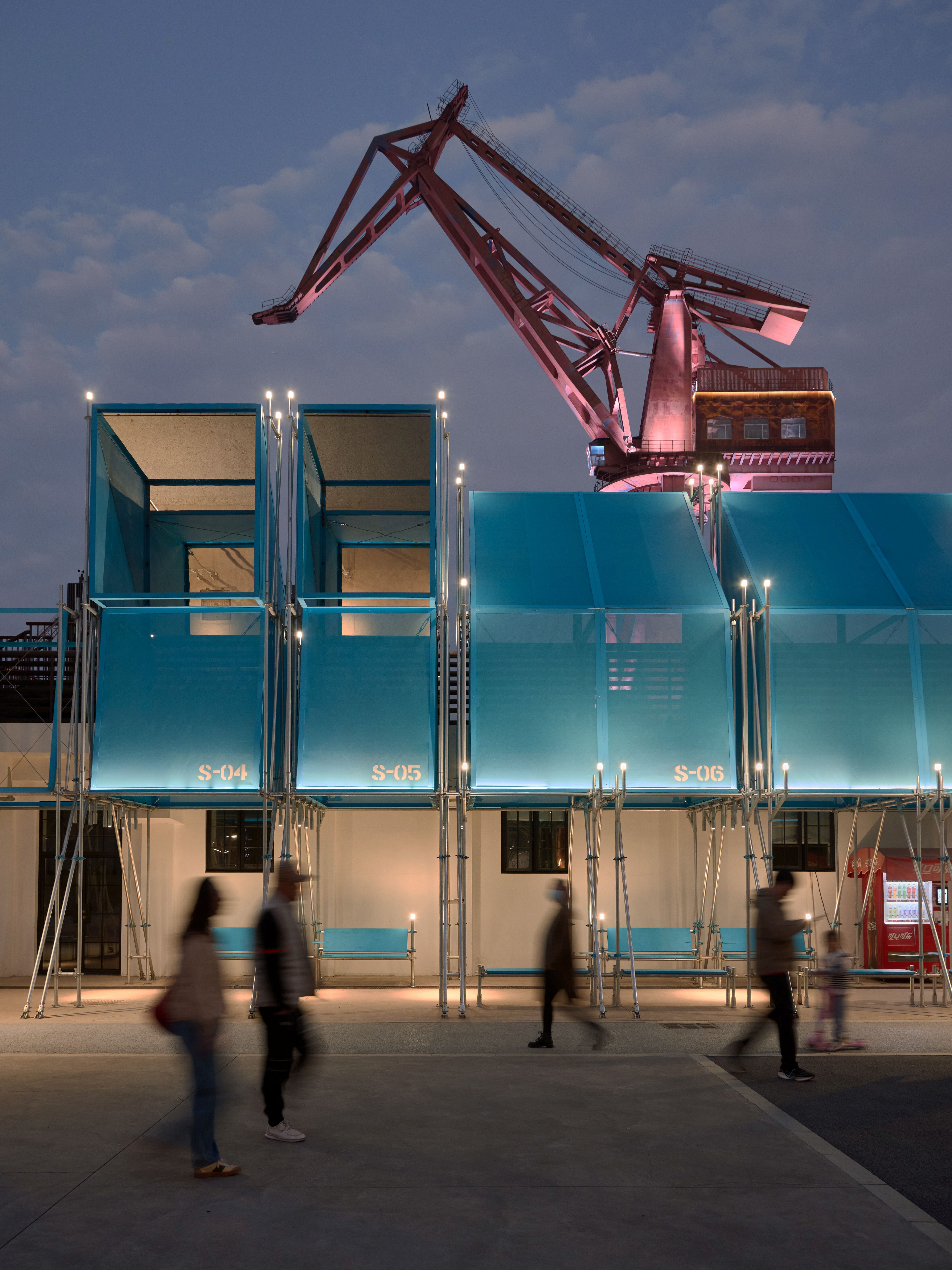
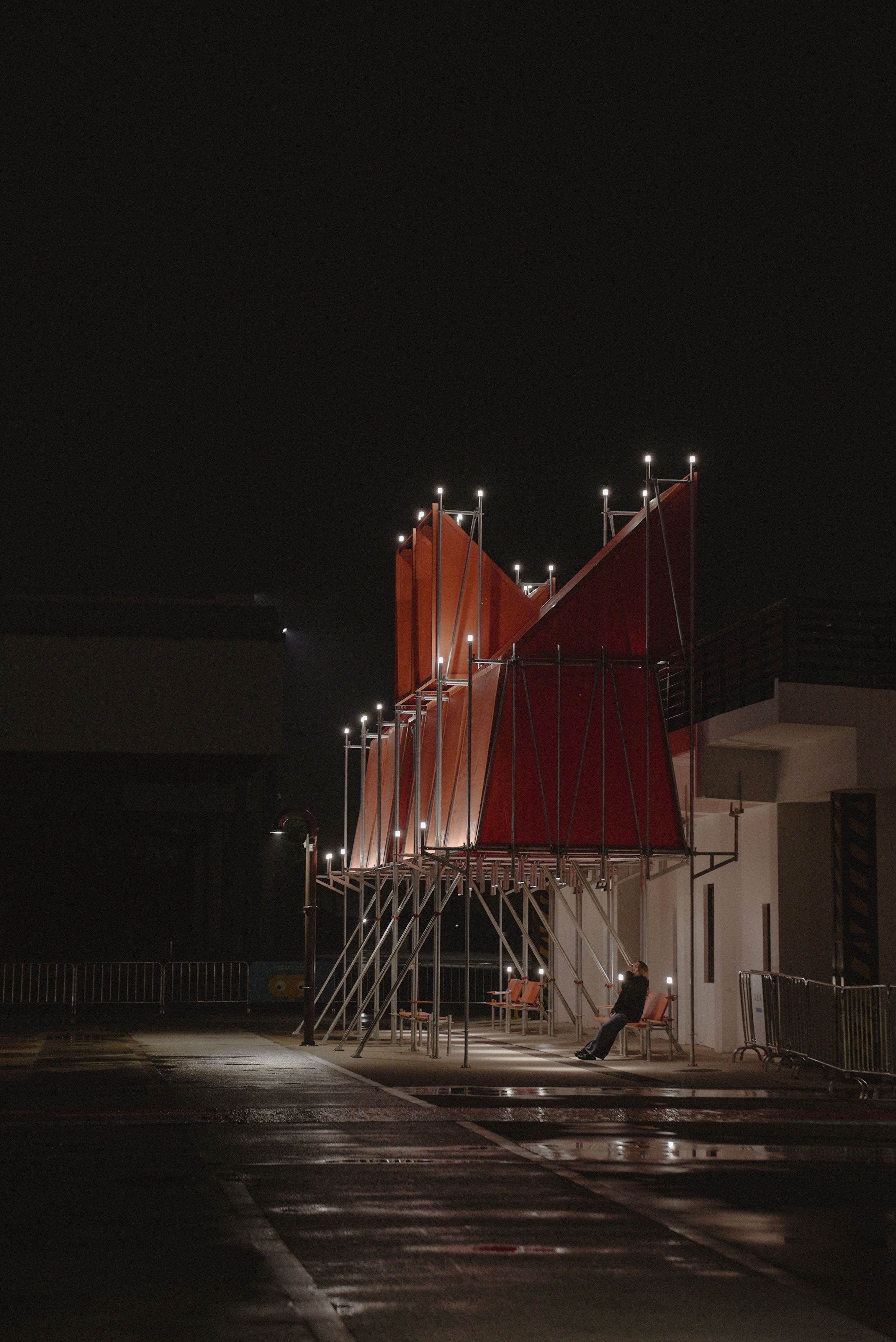
Inspired by this text, we titled the installation The Day of Launching. A tilted stainless-steel mirror at the top forms a "periscope," guiding visitors' gaze over the immense slipway toward the red and blue launching gates by the river—reviving a monumentality once exhilarating, now increasingly forgotten. Yet a VIP box above the slipway imposed a new constraint: it requires privacy, which conflicted with our ambition to look out to the water. In response, we rotated some modules by 180 degrees or left them deliberately "unfinished." Unexpectedly, this not only resolved the practical issue, but also juxtaposed the heavy crane behind with the emerging shipyard across the river in the mirror's reflection, connecting history with the present.
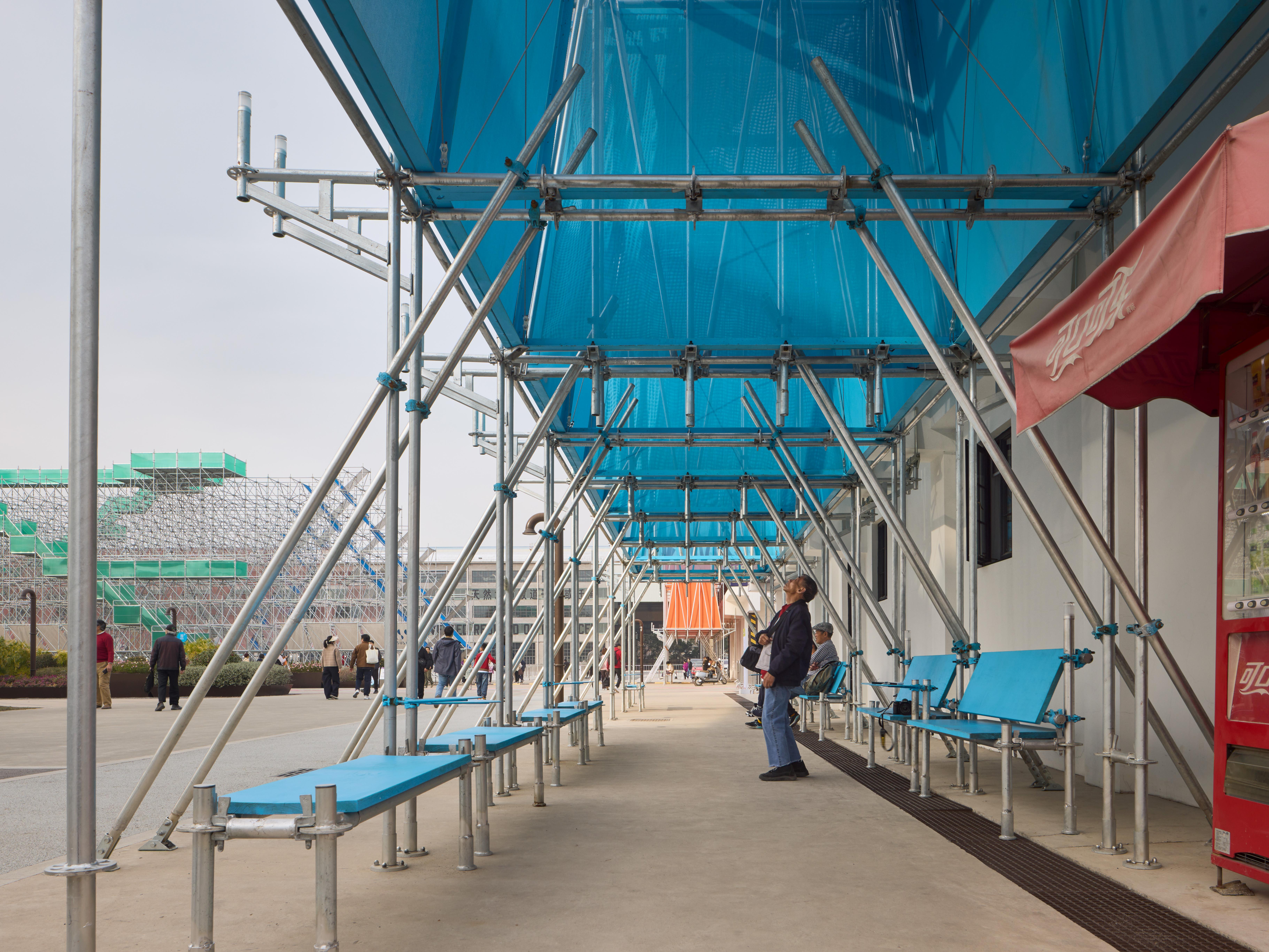
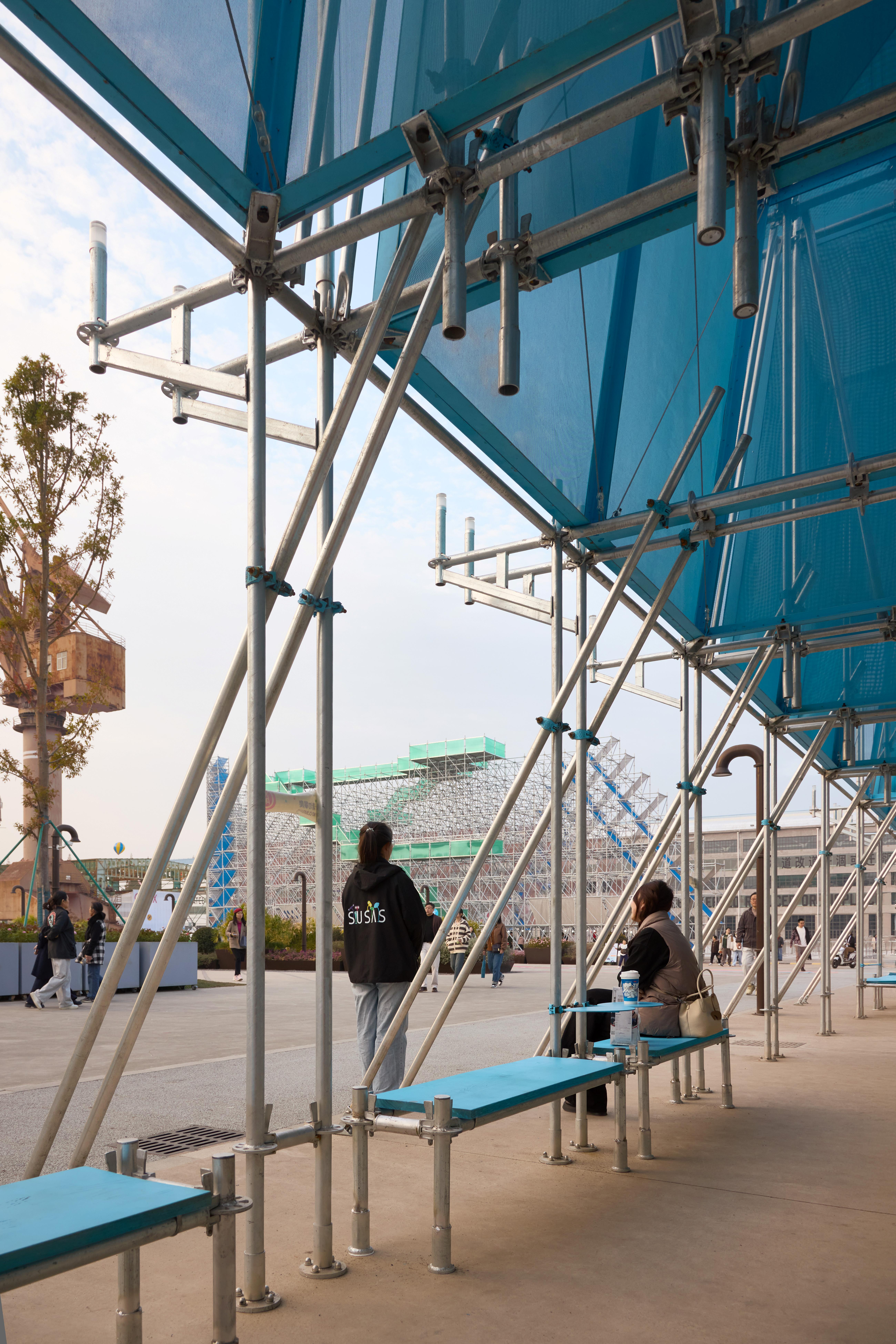
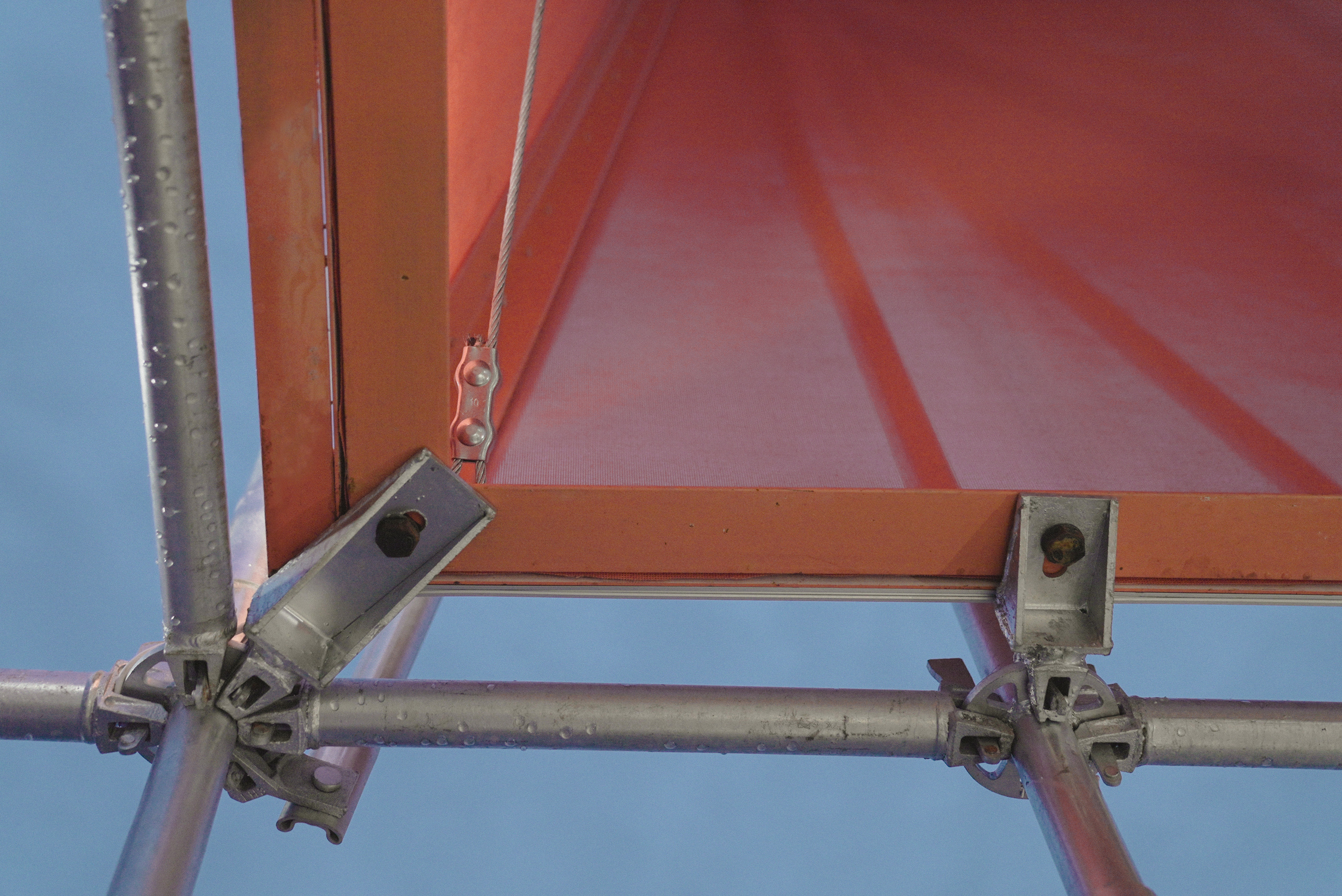
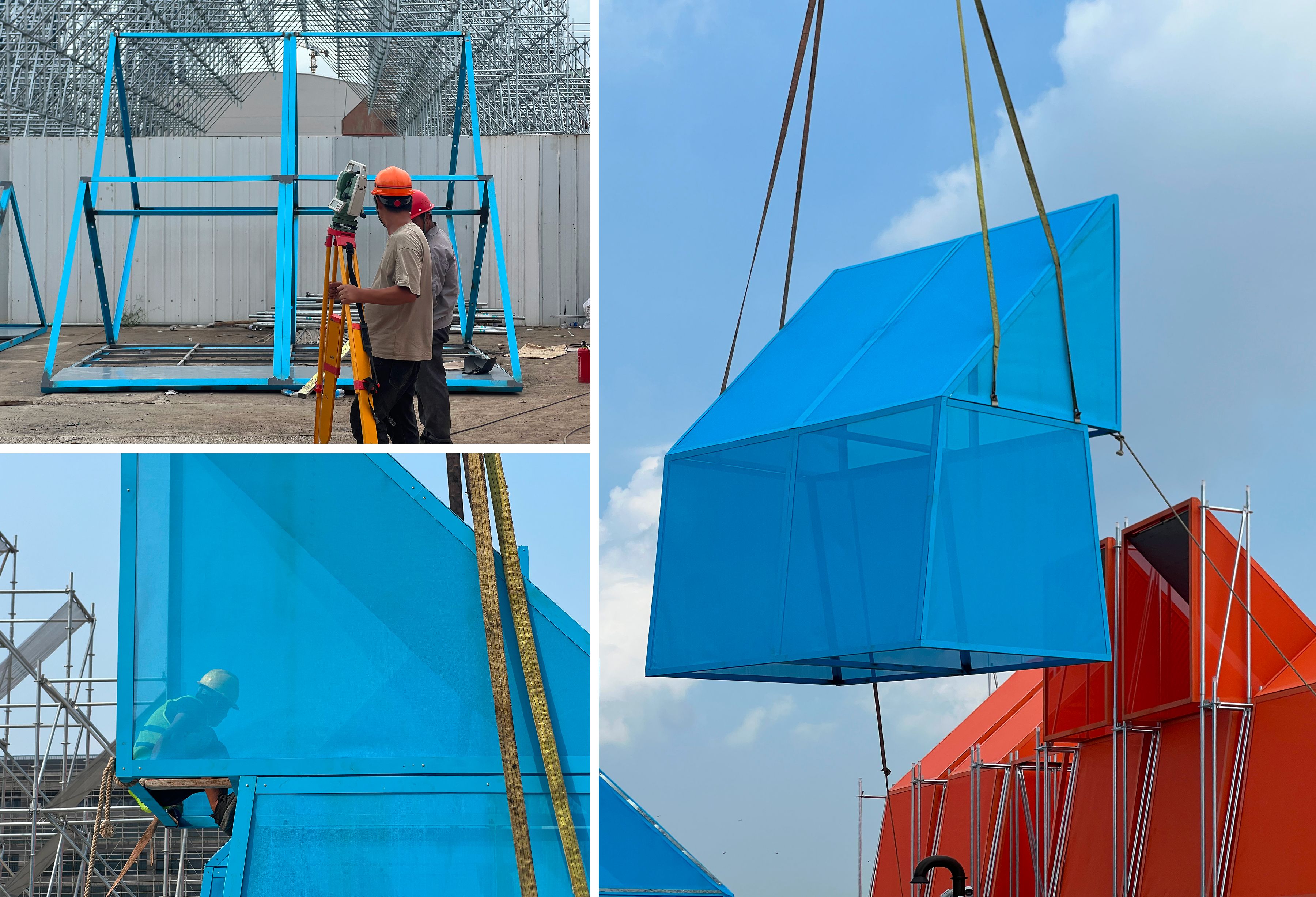
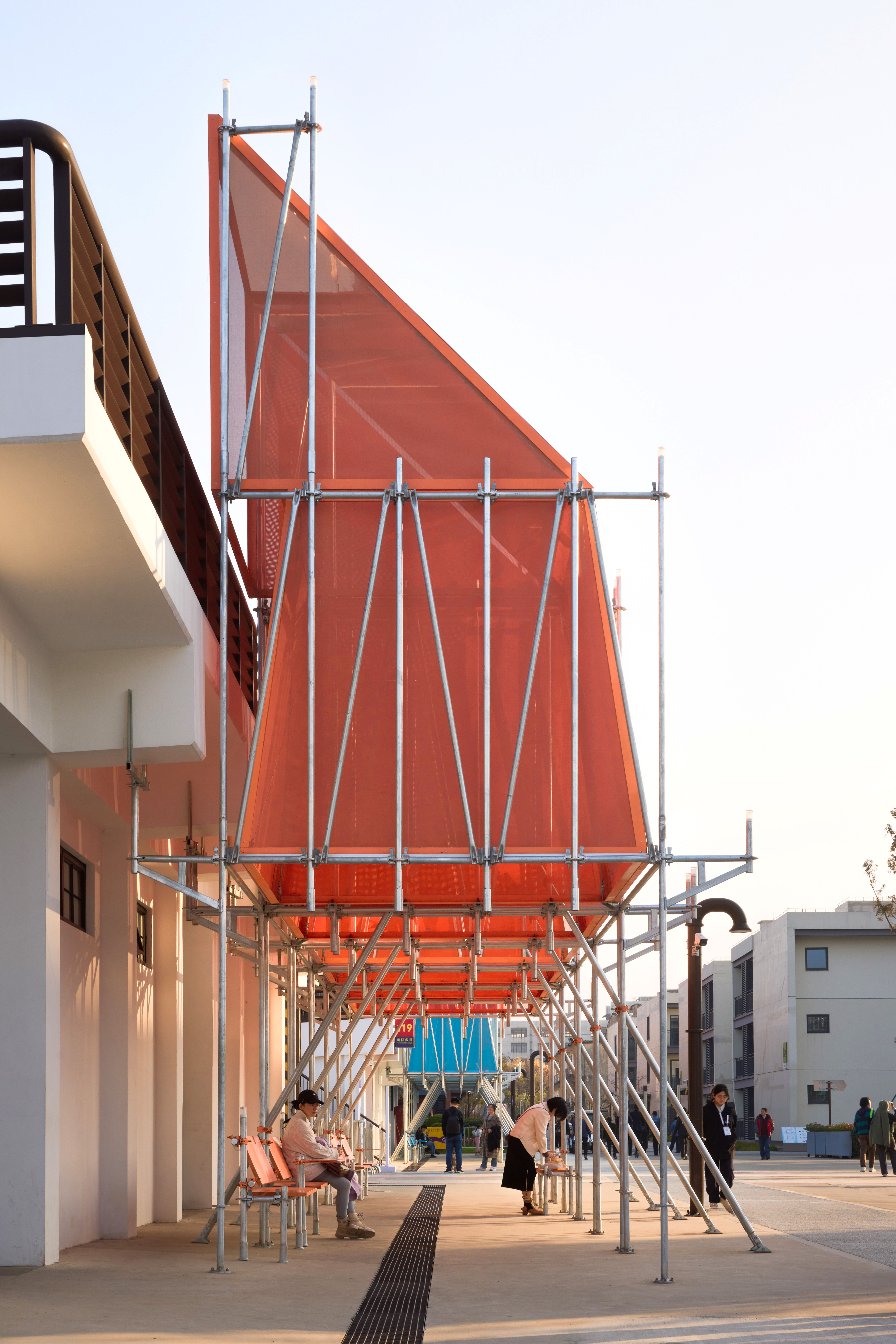
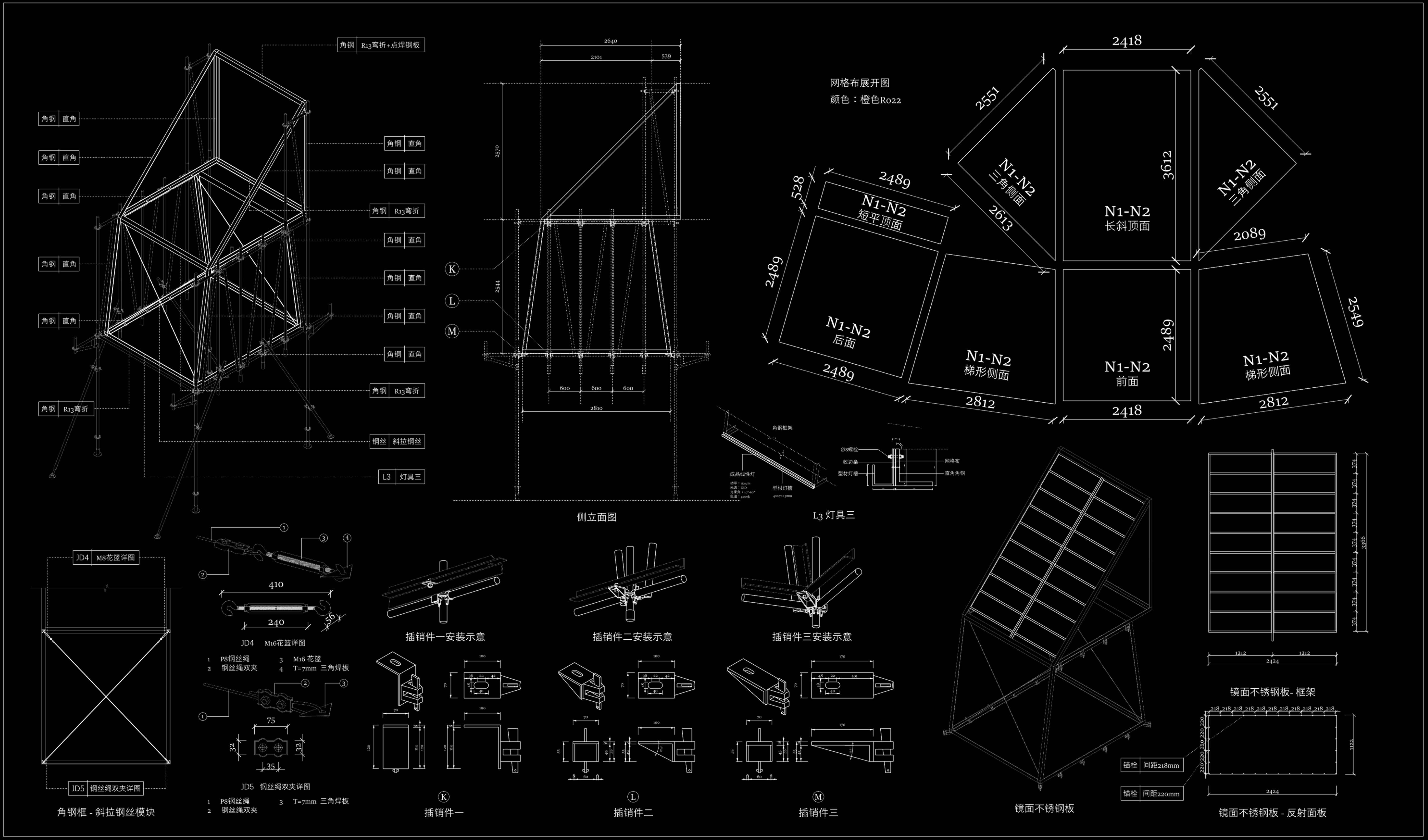
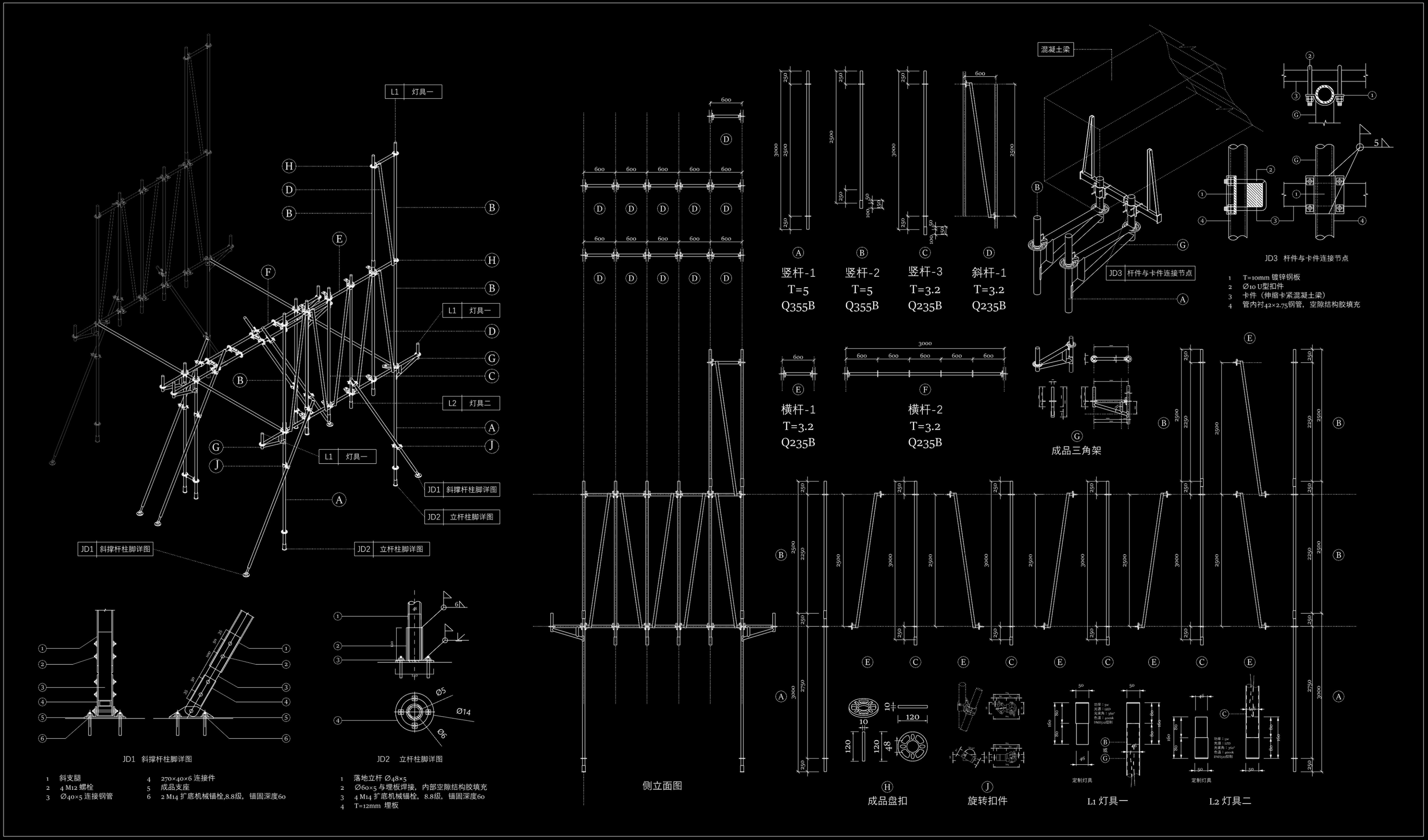
Suspension, force, and assembly are the keys of forms distilled from the site—echoes of the industrial beauty embedded in each stage of shipbuilding. We began with a ring-lock scaffolding system as the primary framework, assembling a "periscope" module through standard components and factory prefabrication. For the structural behavior of each module, we worked closely with the structural engineer to refine the lower pipe frame to be as light and slender as possible—deliberately countering the heavy, conservative impression that scaffolding typically conveys.
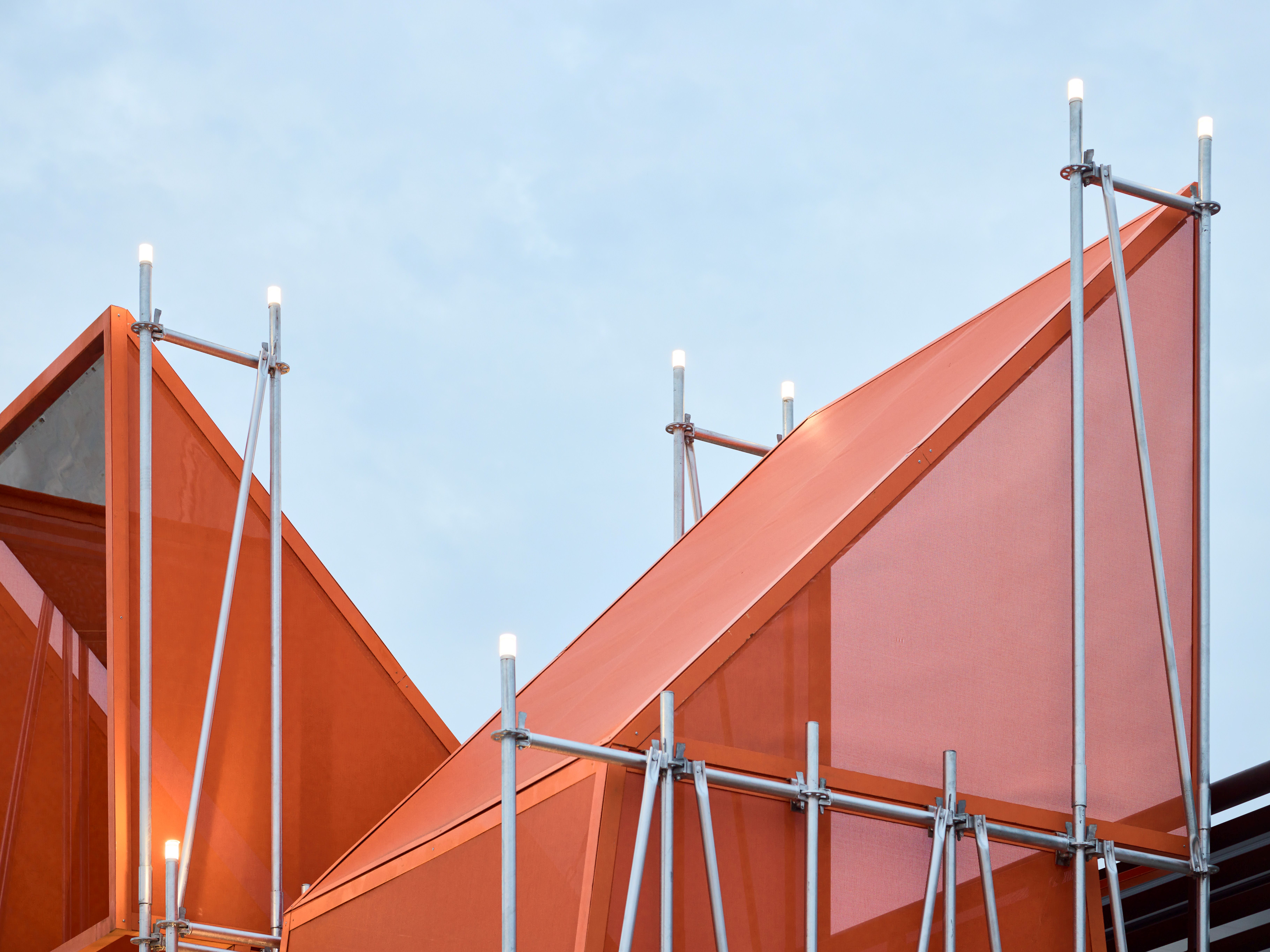
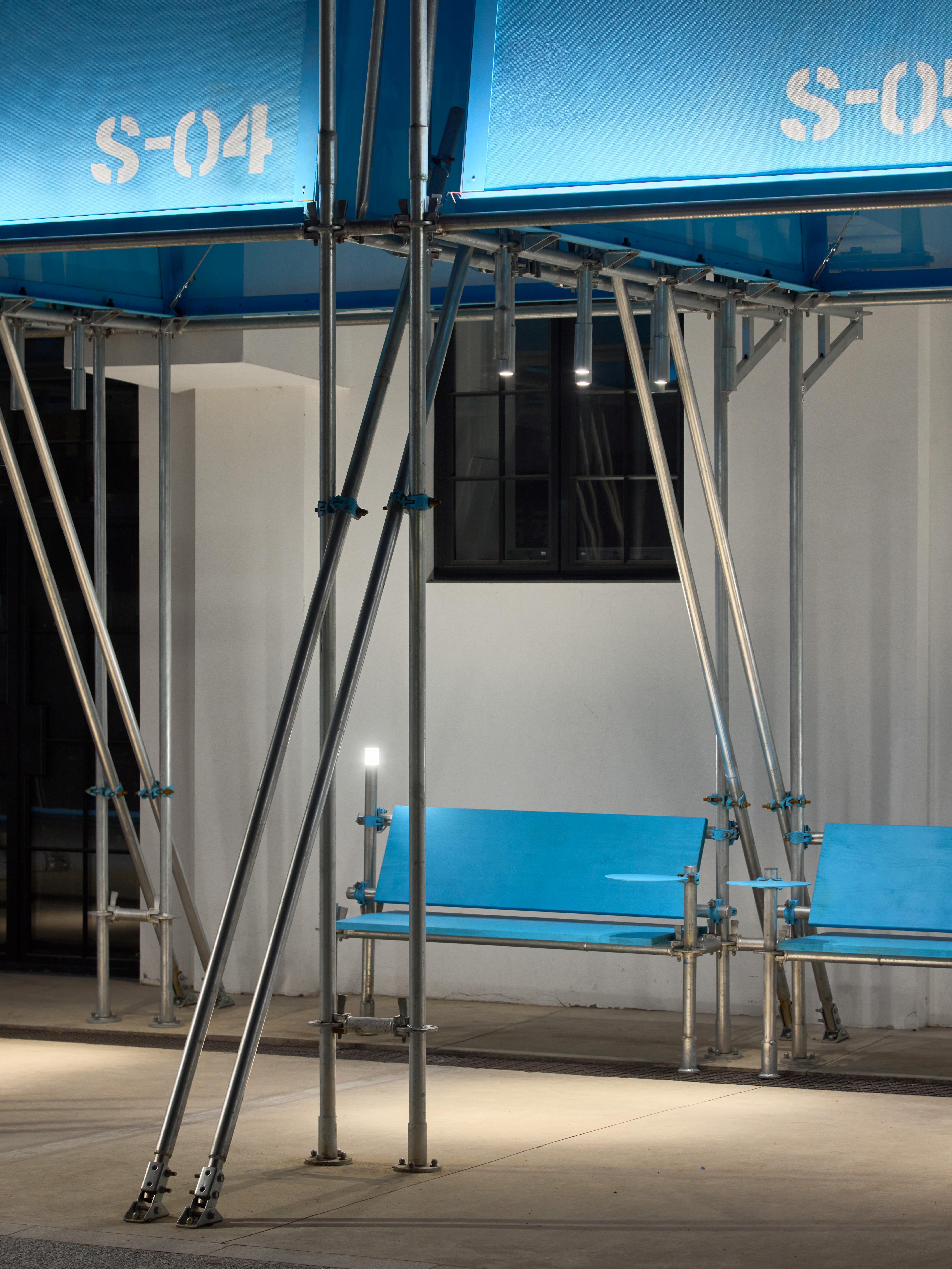
The angle-steel frame at the top, together with the diagonal bracing on both sides, intentionally creates a "top-heavy, light-footed" silhouette while providing robust lateral stability. This gesture echoes the site's colossal cranes resisting gravity, and it also reflects our thinking on "assembly": neither the upper frame nor the lower scaffold can stand alone, yet once joined they interlock. Through this tectonic experiment, we aim to resonate with shipbuilding's fundamental logic—modular assembly culminating in a collective launch. The installation is clad in an exceptionally affordable PVC mesh. From a distance it reads with a surprising solidity and weight; up close it becomes a translucent veil. Its strong self-cleaning performance also makes it well-suited for daily exposure, while enabling shade and lingering beneath. Extending the same constructive logic, we designed small pieces—loungers, benches, and tea tables—along the corridor, allowing the work to enter everyday use.
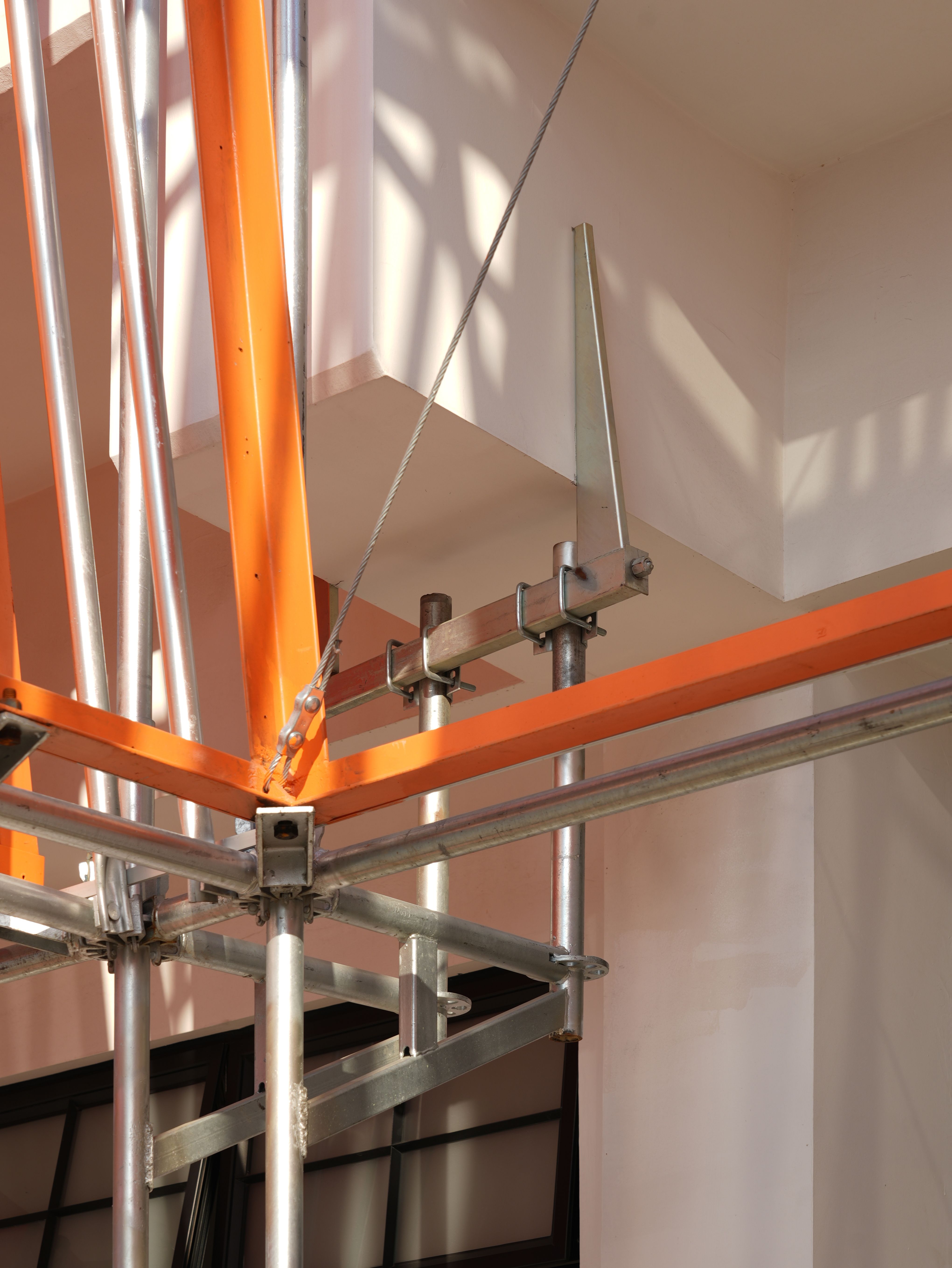
The structural module is fully derived from the slipway's existing column bays. As permanent interventions were not permitted, we developed a load-bearing clamp detail to connect to the original structure and secure lateral resistance. This returns to the project's intention: not a surface-level upgrade, but a protective derivation and continuation built from the site's own framework.
本项目作为SUSAS2025上海城市空间艺术季的参展作品,坐落于杨浦区复兴岛的船台公园,其前身是在世纪初搬迁至浦江对岸的中华造船厂。起初,业主方希望能够通过一组装置提升美化原船台的断面,而现场讨论后我们发现,此处不仅仅标记了场地的中心轴线,更曾承托着无数船舶组装与下水的收官之地——因此,不止步于立面的提升,而建立起一场关于场地内更大尺度的联想成为了本项目的真实出发点。
“下水”(Launching)是船舶工程的尾声,本身是一种持续演进的关键技术,也是船厂最为紧张、庄重的时刻。它不仅关乎工程精度与工艺成熟度,也承载着工人们数月乃至数年的心血与期盼。上世纪 70 年代,中华造船厂工人创作组曾编撰文集《下水那天》,其中描绘了劳动者见证轮船下水时空间与心理的澎湃状态。这些文字不仅记录了瞬间的壮丽,也凝固了人与机器、江水之间独特的情感纽带。“下水”(Launching)是船舶工程的尾声,本身是一种持续演进的关键技术,也是船厂最为紧张、庄重的时刻。它不仅关乎工程精度与工艺成熟度,也承载着工人们数月乃至数年的心血与期盼。上世纪 70 年代,中华造船厂工人创作组曾编撰文集《下水那天》,其中描绘了劳动者见证轮船下水时空间与心理的澎湃状态。这些文字不仅记录了瞬间的壮丽,也凝固了人与机器、江水之间独特的情感纽带。
受此启发,我们以《下水那天》命名了本装置,通过顶部斜置的镜面不锈钢形成“潜望镜”,引导逗留者的视线越过巨大的船台、触及江边的红、蓝两道的下水闸门。以此,唤醒场地上曾经振奋人心而今被日益忘却的纪念性。
然而,船台上方的休息盒子却带来了新的约束条件——其要求一定的隐私性,这与本装置“潜望江面”有所冲突。为此,我们将部分的模组进行180度的“转身”或索性使其“未完成”,意外发现这样的动作不仅规避了现实问题,又将背后的重型吊机与对岸的新兴船厂通过镜面并置,使历史与当下联系了起来。
悬置、着力与组件是本作品从场地中凝练出的形式关键,是造船各环节留存的工业之美。我们试图以盘扣脚手架体系为搭建基础,通过标准采购以及一部分必要的工厂预加工,构成了一套可重复的模组。而在单组的受力计算上,方案与结构师进行了多轮的沟通调整,将底部的管架优化至尽可能的轻快,与日常中脚手架密集而保守的体验形成反差。
而顶部的角钢框架与两侧斜杆则是有意为之的“头重脚轻”,提供刚健充分的侧向稳定力。这一方面是对场地中庞大吊机“抵抗重力”的联系感受,同时也是对“组”(Assembly)的思考——框架与管架皆无法单独成立,而在组装后彼此衔固、各得其所。我们希望通过这样的建构实验,来回应造船工业中“模块拼装—整体下水”的核心逻辑。
出于经济性考量,装置的表面则采用了极高性价比的遮阳网格布。其远望具备固态的重量,而近距离下是半透明的纱,又兼具出色的自洁性,为装置下的区域提供遮蔽与驻留的可能。我们以一致的建构逻辑在走廊中设计了靠椅、坐凳、茶几等小配件,使本作品在纪念性之外,也可融入日常的使用。
若仔细观察,会发现本装置的结构模数是完全基于船台原有柱跨的。因为场地不允许植筋等永久性的结构介入,我们特地设计了“受力夹”的构件来衔接原船台,获得抗侧力——这也回到了我们设计的出发点:不止于一次立面的提升,而是在原场地的基础上进行保护性的衍生与延续。
"Launching" marks the final act of shipbuilding—an evolving critical technique, and often the shipyard's most tense yet ceremonial moment. It is a test of precision and craft maturity, but also the release point of months, even years, of workers' commitment and expectation. In the 1970s, the workers' writing collective at the China Shipbuilding Factory compiled a volume titled The Day of Launching, capturing the surge of space and emotion as laborers witnessed a vessel meet the river. These words do more than describe a spectacular instant; they crystallize a distinctive bond between people, machines, and the waterway that carries them.
Inspired by this text, we titled the installation The Day of Launching. A tilted stainless-steel mirror at the top forms a "periscope," guiding visitors' gaze over the immense slipway toward the red and blue launching gates by the river—reviving a monumentality once exhilarating, now increasingly forgotten. Yet a VIP box above the slipway imposed a new constraint: it requires privacy, which conflicted with our ambition to look out to the water. In response, we rotated some modules by 180 degrees or left them deliberately "unfinished." Unexpectedly, this not only resolved the practical issue, but also juxtaposed the heavy crane behind with the emerging shipyard across the river in the mirror's reflection, connecting history with the present.
Suspension, force, and assembly are the keys of forms distilled from the site—echoes of the industrial beauty embedded in each stage of shipbuilding. We began with a ring-lock scaffolding system as the primary framework, assembling a "periscope" module through standard components and factory prefabrication. For the structural behavior of each module, we worked closely with the structural engineer to refine the lower pipe frame to be as light and slender as possible—deliberately countering the heavy, conservative impression that scaffolding typically conveys.
The angle-steel frame at the top, together with the diagonal bracing on both sides, intentionally creates a "top-heavy, light-footed" silhouette while providing robust lateral stability. This gesture echoes the site's colossal cranes resisting gravity, and it also reflects our thinking on "assembly": neither the upper frame nor the lower scaffold can stand alone, yet once joined they interlock. Through this tectonic experiment, we aim to resonate with shipbuilding's fundamental logic—modular assembly culminating in a collective launch. The installation is clad in an exceptionally affordable PVC mesh. From a distance it reads with a surprising solidity and weight; up close it becomes a translucent veil. Its strong self-cleaning performance also makes it well-suited for daily exposure, while enabling shade and lingering beneath. Extending the same constructive logic, we designed small pieces—loungers, benches, and tea tables—along the corridor, allowing the work to enter everyday use.
The structural module is fully derived from the slipway's existing column bays. As permanent interventions were not permitted, we developed a load-bearing clamp detail to connect to the original structure and secure lateral resistance. This returns to the project's intention: not a surface-level upgrade, but a protective derivation and continuation built from the site's own framework.
本项目作为SUSAS2025上海城市空间艺术季的参展作品,坐落于杨浦区复兴岛的船台公园,其前身是在世纪初搬迁至浦江对岸的中华造船厂。起初,业主方希望能够通过一组装置提升美化原船台的断面,而现场讨论后我们发现,此处不仅仅标记了场地的中心轴线,更曾承托着无数船舶组装与下水的收官之地——因此,不止步于立面的提升,而建立起一场关于场地内更大尺度的联想成为了本项目的真实出发点。
“下水”(Launching)是船舶工程的尾声,本身是一种持续演进的关键技术,也是船厂最为紧张、庄重的时刻。它不仅关乎工程精度与工艺成熟度,也承载着工人们数月乃至数年的心血与期盼。上世纪 70 年代,中华造船厂工人创作组曾编撰文集《下水那天》,其中描绘了劳动者见证轮船下水时空间与心理的澎湃状态。这些文字不仅记录了瞬间的壮丽,也凝固了人与机器、江水之间独特的情感纽带。“下水”(Launching)是船舶工程的尾声,本身是一种持续演进的关键技术,也是船厂最为紧张、庄重的时刻。它不仅关乎工程精度与工艺成熟度,也承载着工人们数月乃至数年的心血与期盼。上世纪 70 年代,中华造船厂工人创作组曾编撰文集《下水那天》,其中描绘了劳动者见证轮船下水时空间与心理的澎湃状态。这些文字不仅记录了瞬间的壮丽,也凝固了人与机器、江水之间独特的情感纽带。
受此启发,我们以《下水那天》命名了本装置,通过顶部斜置的镜面不锈钢形成“潜望镜”,引导逗留者的视线越过巨大的船台、触及江边的红、蓝两道的下水闸门。以此,唤醒场地上曾经振奋人心而今被日益忘却的纪念性。
然而,船台上方的休息盒子却带来了新的约束条件——其要求一定的隐私性,这与本装置“潜望江面”有所冲突。为此,我们将部分的模组进行180度的“转身”或索性使其“未完成”,意外发现这样的动作不仅规避了现实问题,又将背后的重型吊机与对岸的新兴船厂通过镜面并置,使历史与当下联系了起来。
悬置、着力与组件是本作品从场地中凝练出的形式关键,是造船各环节留存的工业之美。我们试图以盘扣脚手架体系为搭建基础,通过标准采购以及一部分必要的工厂预加工,构成了一套可重复的模组。而在单组的受力计算上,方案与结构师进行了多轮的沟通调整,将底部的管架优化至尽可能的轻快,与日常中脚手架密集而保守的体验形成反差。
而顶部的角钢框架与两侧斜杆则是有意为之的“头重脚轻”,提供刚健充分的侧向稳定力。这一方面是对场地中庞大吊机“抵抗重力”的联系感受,同时也是对“组”(Assembly)的思考——框架与管架皆无法单独成立,而在组装后彼此衔固、各得其所。我们希望通过这样的建构实验,来回应造船工业中“模块拼装—整体下水”的核心逻辑。
出于经济性考量,装置的表面则采用了极高性价比的遮阳网格布。其远望具备固态的重量,而近距离下是半透明的纱,又兼具出色的自洁性,为装置下的区域提供遮蔽与驻留的可能。我们以一致的建构逻辑在走廊中设计了靠椅、坐凳、茶几等小配件,使本作品在纪念性之外,也可融入日常的使用。
若仔细观察,会发现本装置的结构模数是完全基于船台原有柱跨的。因为场地不允许植筋等永久性的结构介入,我们特地设计了“受力夹”的构件来衔接原船台,获得抗侧力——这也回到了我们设计的出发点:不止于一次立面的提升,而是在原场地的基础上进行保护性的衍生与延续。
Location: Shanghai, China
地理位置:中国上海市复兴岛船台公园
Status: Built
项目状态:建成
Duration: 2025
项目周期:2025
Partner Architect: Practice on Earth
合作方:猜一建筑
Team: Zi Meng, Yinuo Qiu, Guanming Huang
团队:孟子、邱一诺、黄思遥
Photographer: Qingyan Zhu, Daisy Zhang, Action Media
摄影:朱清言、张子彦、Action Media
地理位置:中国上海市复兴岛船台公园
Status: Built
项目状态:建成
Duration: 2025
项目周期:2025
Partner Architect: Practice on Earth
合作方:猜一建筑
Team: Zi Meng, Yinuo Qiu, Guanming Huang
团队:孟子、邱一诺、黄思遥
Photographer: Qingyan Zhu, Daisy Zhang, Action Media
摄影:朱清言、张子彦、Action Media