LANG BAR
浪吧
浪吧
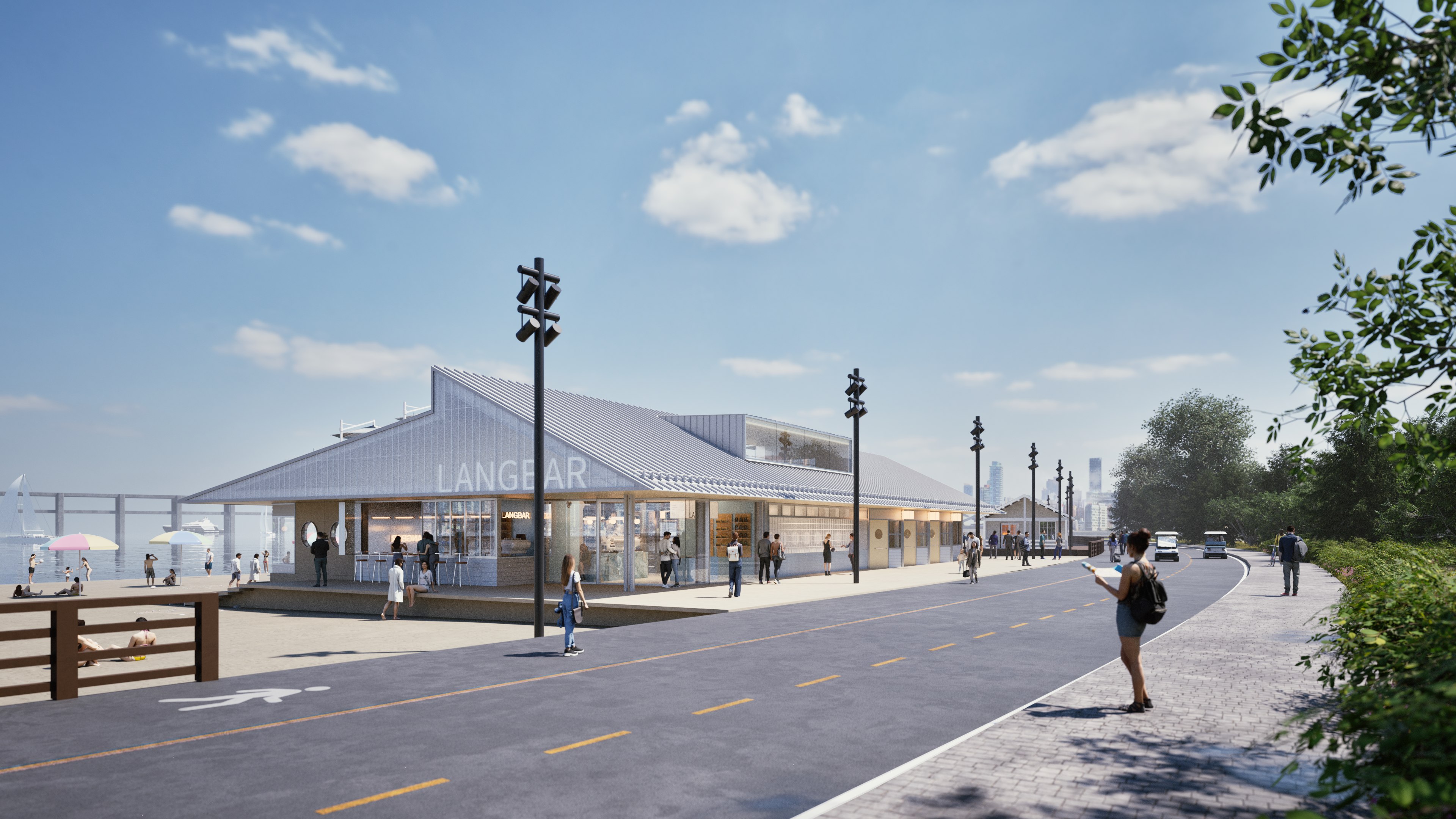
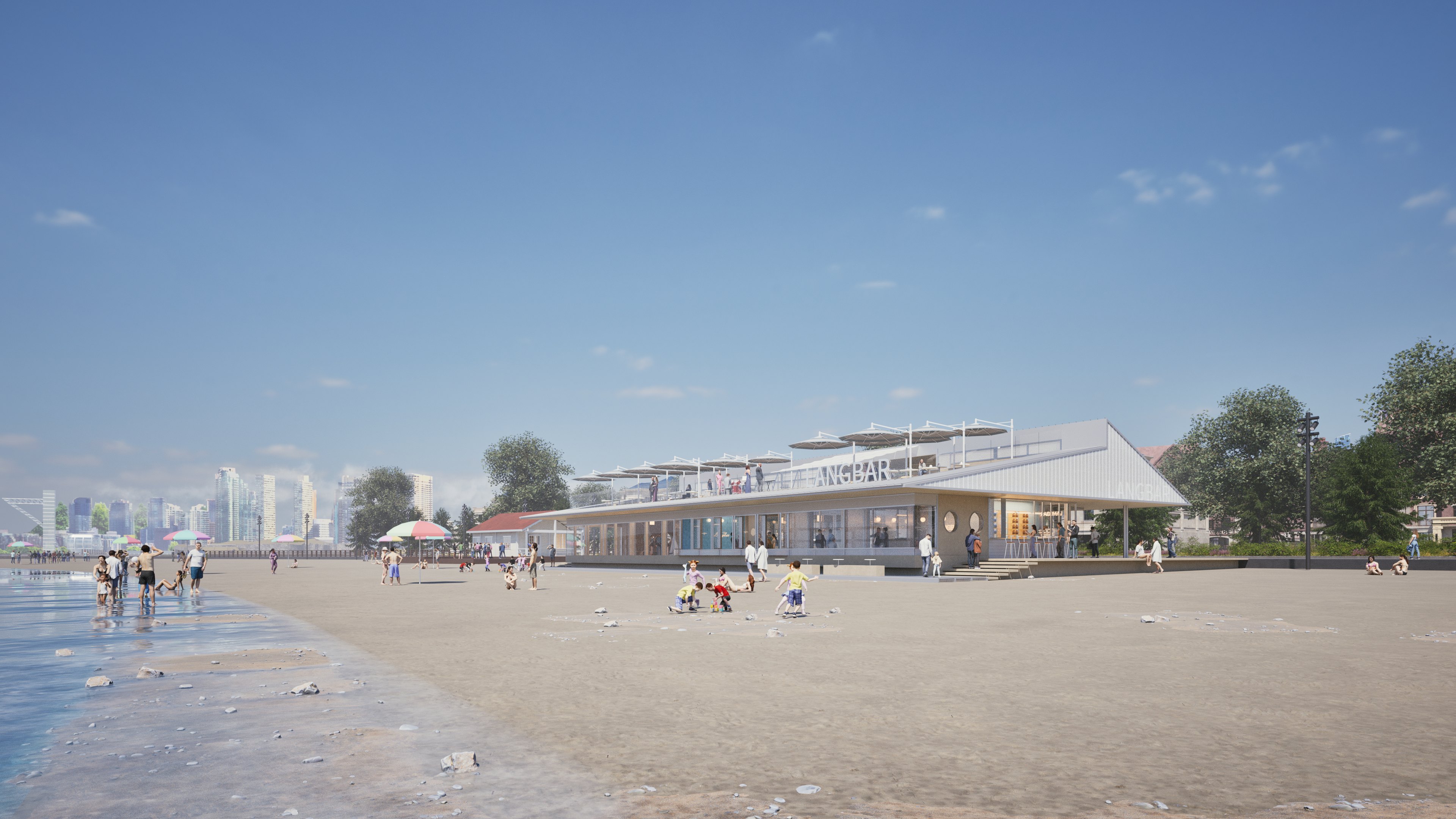
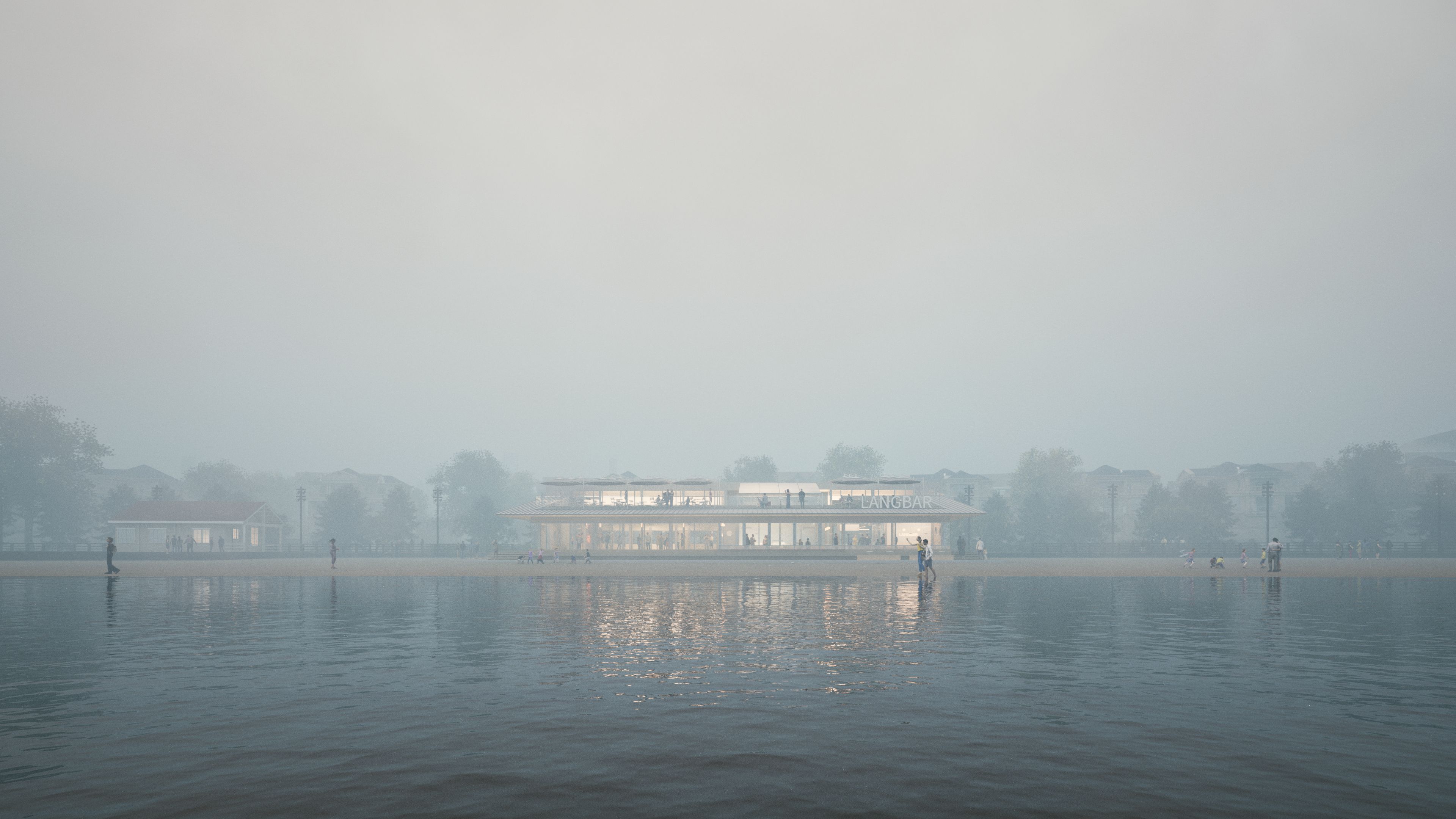
The Lang Bar is situated along the public waterfront interface of Xinghai Bay in Dalian, conceived as a new type of urban coastal space integrating light dining, retail, and cultural activities. Facing an open shoreline and a highly active pedestrian system, the project explores a coastal architectural prototype that balances commercial vitality with public accessibility under intensely public urban conditions.
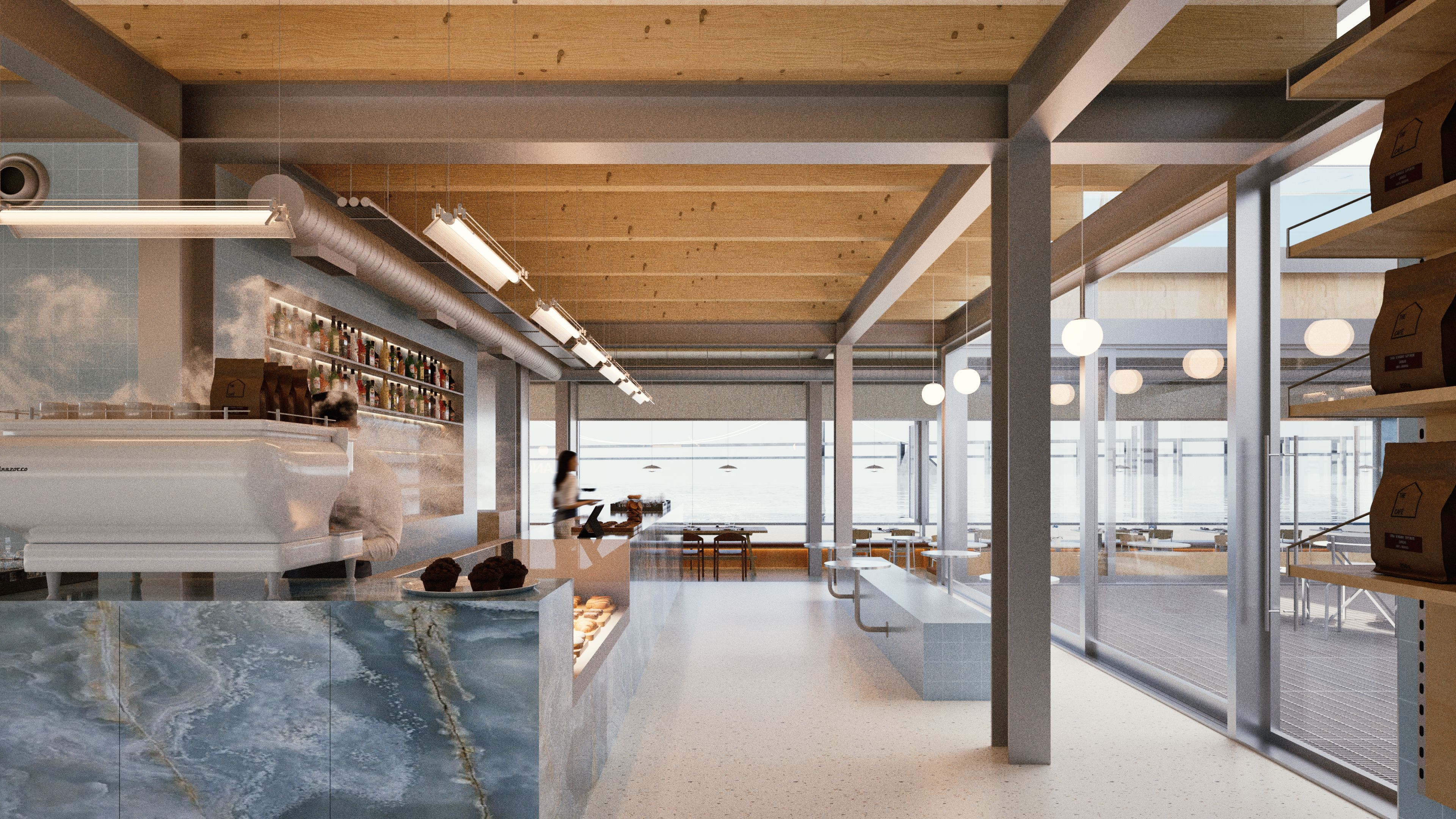
The project operates through a collaborative light-dining model, combined with pop-up retail and periodically changing cultural events, forming a continuously renewable programmatic structure. Rather than functioning as a single-purpose commercial venue, the Lang Bar emphasizes openness of scenario and flexibility of use, allowing the space to shift roles across different times, seasons, and user groups — accommodating daily consumption while also supporting temporary gathering, social interaction, and urban activities.
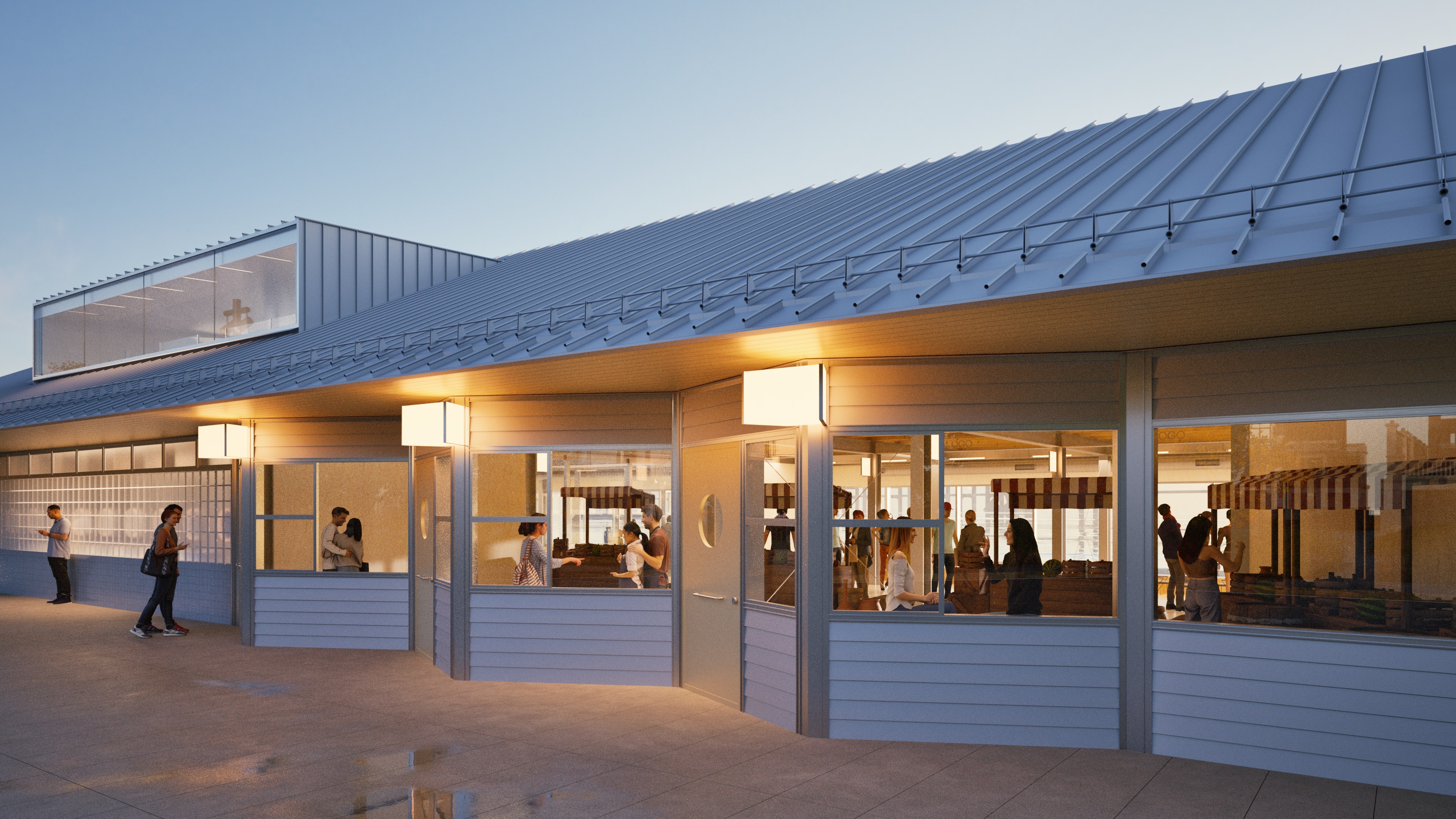
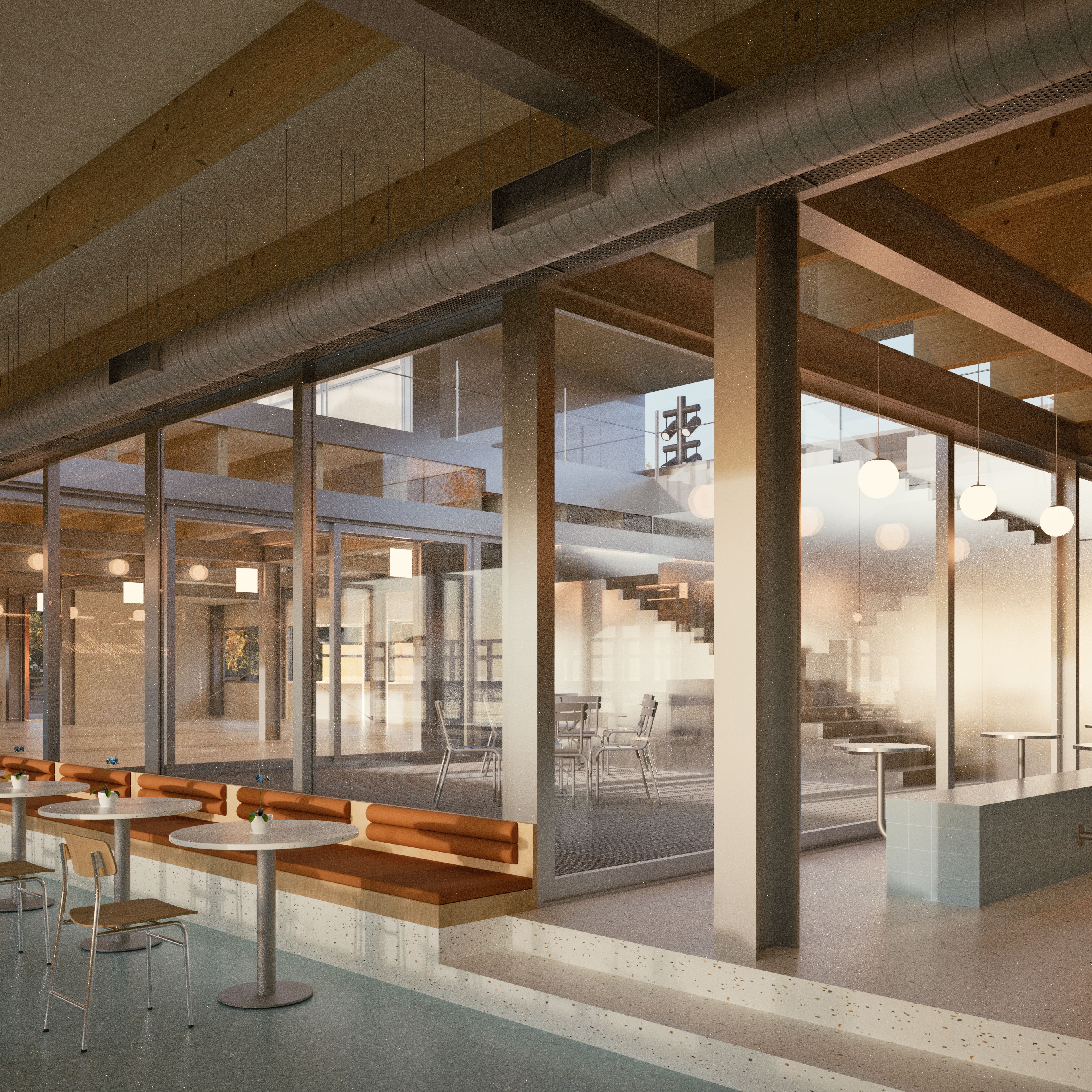
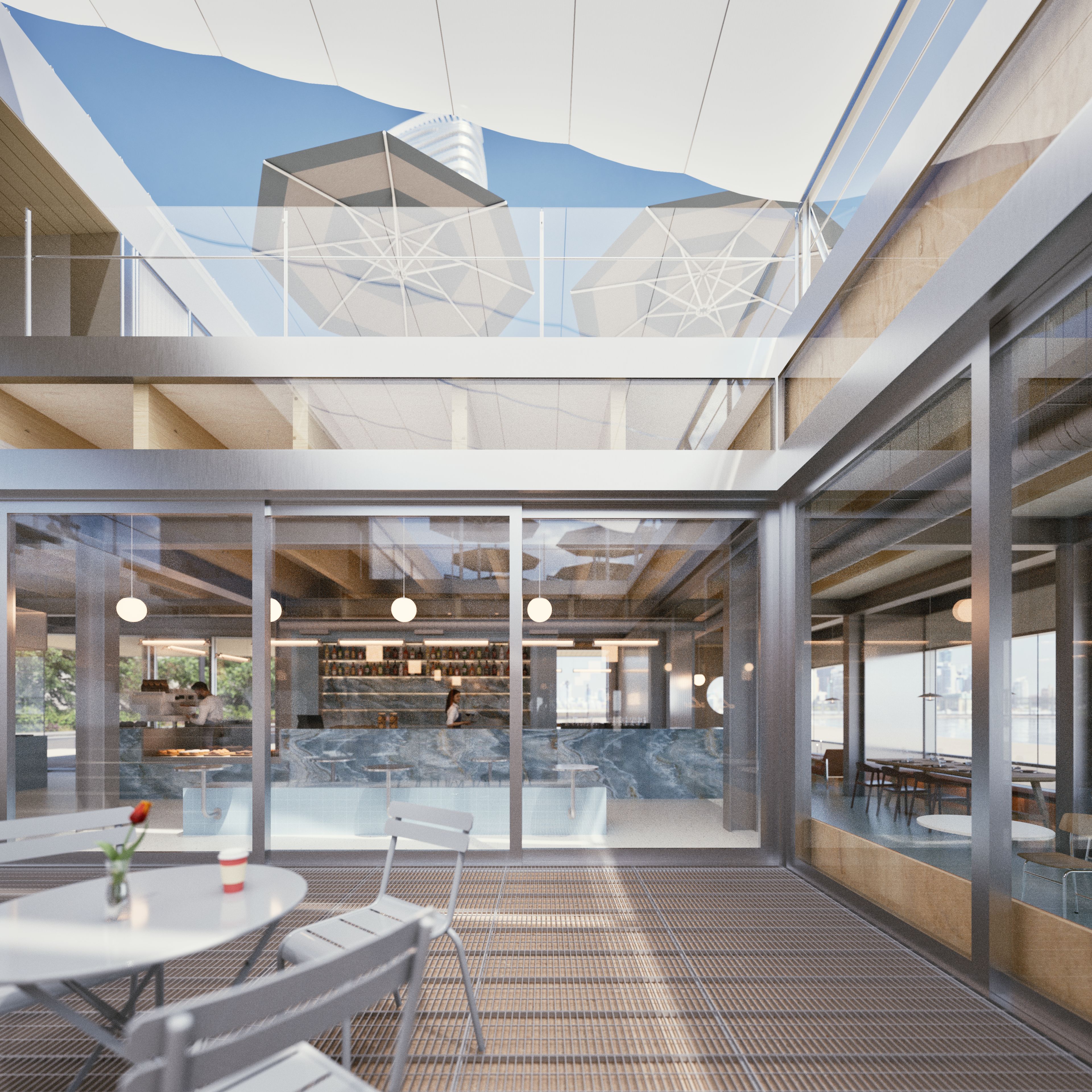
Spatially, the building adopts a compact yet legible organizational strategy, arranging dining, retail, and public activities around an open courtyard. As a transitional space between interior and exterior, the courtyard enables continuous circulation of movement, views, and events throughout the building, while also providing flexible conditions for exhibitions, performances, and temporary markets. Through operable openings and adaptable boundaries, the courtyard and surrounding spaces can function independently or merge into a unified environment depending on different scenarios.
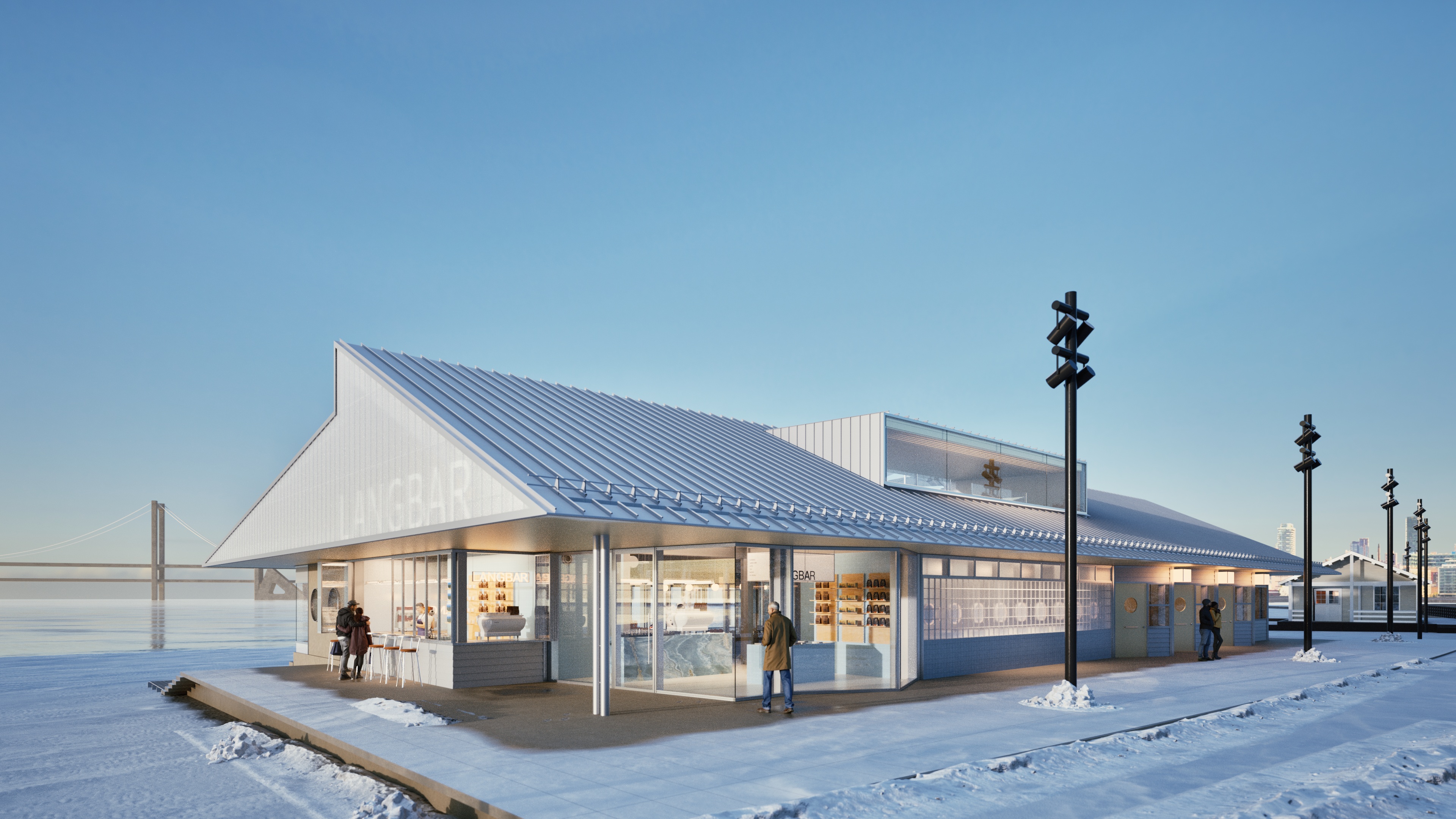
In response to the pronounced seasonal changes of the coastal environment, the building mass is carefully controlled at an appropriate scale, while stepped roofs and outdoor terraces further expand the range of inhabitable spatial conditions. During spring and summer, the stepped roof becomes a platform for viewing and relaxation; in winter, it remains as part of the urban landscape, allowing the architecture to retain spatial value across both peak and off seasons. In this sense, the Lang Bar is no longer merely an indoor consumption venue, but a multi-use node embedded within the broader waterfront promenade system.
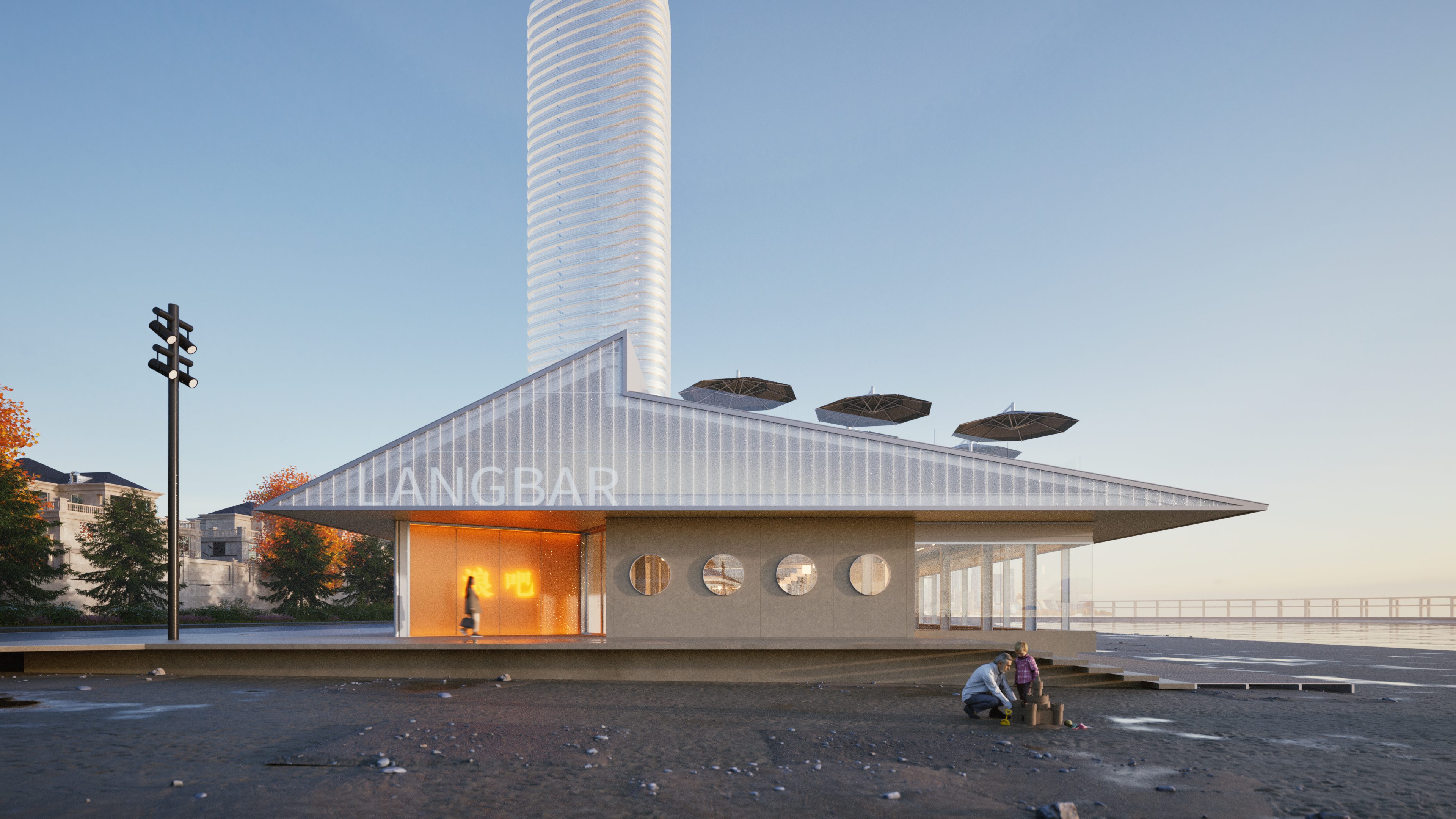
The façade is differentiated according to orientation and programmatic requirements. The dining areas facing the bay employ large operable openings to establish a direct relationship between interior activities and the sea view; along the street side, shaded edge spaces, inhabitable thresholds, and approachable openings cultivate a pedestrian-friendly atmosphere conducive to lingering and interaction. The overall form adopts a simple pitched-roof language, combined with lightweight materials and restrained detailing, resulting in a clear yet understated architectural presence within the coastal environment.
Rather than pursuing iconicity, the Lang Bar embeds itself into the everyday life of the city through an open spatial framework and adaptable modes of use. It responds not only to the natural conditions of the coastline, but also to contemporary urban demands for new forms of publicness and consumption, becoming a coastal place capable of repeated occupation and continuous renewal.
浪吧位于大连星海湾的滨海公共界面,是一处融合轻餐饮、零售与艺文活动的新型城市空间。项目面向开放的海岸线与高频使用的城市步行系统,在高度公共的场所条件下,探索一种兼具商业活力与公共属性的滨海建筑原型。
项目以协作式轻餐饮为核心运营逻辑,结合慢闪零售与不定期艺文活动,形成可持续更新的使用结构。相较于单一功能导向的商业空间,浪吧更强调场景的开放性与使用方式的弹性,使空间能够在不同时间、季节与人群之间切换角色,既服务日常消费,也承载短暂停留、社交与城市活动。
在空间组织上,建筑采用紧凑而清晰的布局策略,将餐饮、零售与公共活动围绕一个开放的庭院展开。庭院作为室内与室外之间的过渡空间,使人流、视线与活动在建筑内部形成连续的循环,也为展览、表演与临时市集等活动提供了灵活的场所条件。通过可开启的门窗与可变的界面处理,庭院与周边空间在不同场景下既可相对独立,也可整体联通。
面对滨海环境明显的季节变化,建筑体量被控制在适宜的尺度内,并通过屋顶台阶与室外平台的引入,进一步扩展了可使用的空间层次。阶梯式屋面在春夏季节转化为观景与休憩的平台,在冬季则作为城市景观的一部分存在,使建筑在淡旺季之间保持稳定的空间价值。由此,浪吧不再只是室内消费场所,而是成为滨海步道体系中的一个可被多样化使用的节点。
建筑立面根据不同朝向与功能进行差异化处理。面向海湾的餐饮区域采用大面积可开启界面,使室内活动与海景形成直接联系;沿街一侧则通过檐下空间、可坐可停的灰空间与亲人的开口尺度,营造适宜步行与停留的街道氛围。整体形态以简洁的坡屋顶为母题,结合轻量化的材料选择与克制的细部处理,在滨海环境中呈现出清晰而不过度张扬的建筑形象。
浪吧并不以“地标化”为目标,而是通过开放的空间结构与可变的使用方式,嵌入城市的日常生活之中。它既回应海岸线的自然条件,也回应当代城市对公共性与消费空间的新需求,成为一处可被反复使用、不断更新的滨海场所。
The project operates through a collaborative light-dining model, combined with pop-up retail and periodically changing cultural events, forming a continuously renewable programmatic structure. Rather than functioning as a single-purpose commercial venue, the Lang Bar emphasizes openness of scenario and flexibility of use, allowing the space to shift roles across different times, seasons, and user groups — accommodating daily consumption while also supporting temporary gathering, social interaction, and urban activities.
Spatially, the building adopts a compact yet legible organizational strategy, arranging dining, retail, and public activities around an open courtyard. As a transitional space between interior and exterior, the courtyard enables continuous circulation of movement, views, and events throughout the building, while also providing flexible conditions for exhibitions, performances, and temporary markets. Through operable openings and adaptable boundaries, the courtyard and surrounding spaces can function independently or merge into a unified environment depending on different scenarios.
In response to the pronounced seasonal changes of the coastal environment, the building mass is carefully controlled at an appropriate scale, while stepped roofs and outdoor terraces further expand the range of inhabitable spatial conditions. During spring and summer, the stepped roof becomes a platform for viewing and relaxation; in winter, it remains as part of the urban landscape, allowing the architecture to retain spatial value across both peak and off seasons. In this sense, the Lang Bar is no longer merely an indoor consumption venue, but a multi-use node embedded within the broader waterfront promenade system.
The façade is differentiated according to orientation and programmatic requirements. The dining areas facing the bay employ large operable openings to establish a direct relationship between interior activities and the sea view; along the street side, shaded edge spaces, inhabitable thresholds, and approachable openings cultivate a pedestrian-friendly atmosphere conducive to lingering and interaction. The overall form adopts a simple pitched-roof language, combined with lightweight materials and restrained detailing, resulting in a clear yet understated architectural presence within the coastal environment.
Rather than pursuing iconicity, the Lang Bar embeds itself into the everyday life of the city through an open spatial framework and adaptable modes of use. It responds not only to the natural conditions of the coastline, but also to contemporary urban demands for new forms of publicness and consumption, becoming a coastal place capable of repeated occupation and continuous renewal.
浪吧位于大连星海湾的滨海公共界面,是一处融合轻餐饮、零售与艺文活动的新型城市空间。项目面向开放的海岸线与高频使用的城市步行系统,在高度公共的场所条件下,探索一种兼具商业活力与公共属性的滨海建筑原型。
项目以协作式轻餐饮为核心运营逻辑,结合慢闪零售与不定期艺文活动,形成可持续更新的使用结构。相较于单一功能导向的商业空间,浪吧更强调场景的开放性与使用方式的弹性,使空间能够在不同时间、季节与人群之间切换角色,既服务日常消费,也承载短暂停留、社交与城市活动。
在空间组织上,建筑采用紧凑而清晰的布局策略,将餐饮、零售与公共活动围绕一个开放的庭院展开。庭院作为室内与室外之间的过渡空间,使人流、视线与活动在建筑内部形成连续的循环,也为展览、表演与临时市集等活动提供了灵活的场所条件。通过可开启的门窗与可变的界面处理,庭院与周边空间在不同场景下既可相对独立,也可整体联通。
面对滨海环境明显的季节变化,建筑体量被控制在适宜的尺度内,并通过屋顶台阶与室外平台的引入,进一步扩展了可使用的空间层次。阶梯式屋面在春夏季节转化为观景与休憩的平台,在冬季则作为城市景观的一部分存在,使建筑在淡旺季之间保持稳定的空间价值。由此,浪吧不再只是室内消费场所,而是成为滨海步道体系中的一个可被多样化使用的节点。
建筑立面根据不同朝向与功能进行差异化处理。面向海湾的餐饮区域采用大面积可开启界面,使室内活动与海景形成直接联系;沿街一侧则通过檐下空间、可坐可停的灰空间与亲人的开口尺度,营造适宜步行与停留的街道氛围。整体形态以简洁的坡屋顶为母题,结合轻量化的材料选择与克制的细部处理,在滨海环境中呈现出清晰而不过度张扬的建筑形象。
浪吧并不以“地标化”为目标,而是通过开放的空间结构与可变的使用方式,嵌入城市的日常生活之中。它既回应海岸线的自然条件,也回应当代城市对公共性与消费空间的新需求,成为一处可被反复使用、不断更新的滨海场所。
Location: Dalian, China
地理位置:中国辽宁省大连市
Status: Schematic Design
项目状态:方案深化
Duration: 2025
项目周期:2025
Partner Architect: Object Imaginary
合作方:Object Imaginary
Team: Zi Meng, Yangyang Liu, Yifei Feng, Yinuo Qiu, Guanming Huang
团队:孟子,刘杨洋,冯奕斐,邱一诺,黄冠铭
地理位置:中国辽宁省大连市
Status: Schematic Design
项目状态:方案深化
Duration: 2025
项目周期:2025
Partner Architect: Object Imaginary
合作方:Object Imaginary
Team: Zi Meng, Yangyang Liu, Yifei Feng, Yinuo Qiu, Guanming Huang
团队:孟子,刘杨洋,冯奕斐,邱一诺,黄冠铭