DOUMEN NEW MANIFESTO
LIVING ROOM OF WATER
斗门新古镇宣言
水的客厅
LIVING ROOM OF WATER
斗门新古镇宣言
水的客厅
The Living Room of Water is located at the western entrance of Doumen Old Street and serves as a critical interface between the town’s everyday life and its river system. Rather than shaping this area as a highly recognizable gateway, the project focuses on addressing long-standing spatial issues: the occupation of the waterfront by infrastructure, the gradual detachment of daily life from the water, and the deterioration of the natural system. Together, these issues have weakened Doumen’s water-based spatial order, transforming the riverbank from a lived environment into a passive scenic backdrop.
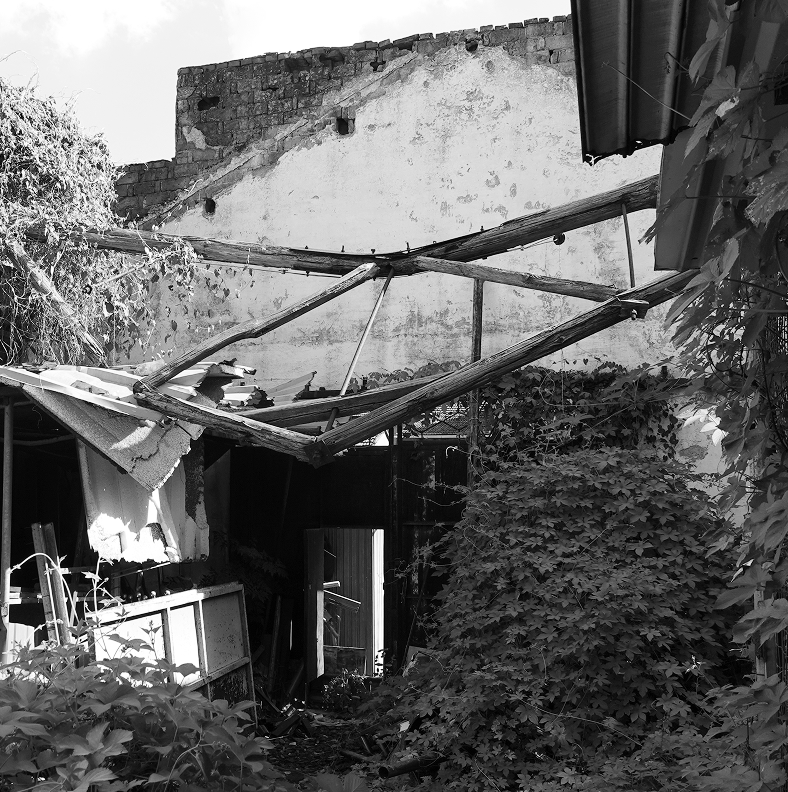
On the north bank, the original waterside stone steps—once an integral part of everyday life—were replaced by hardened concrete surfaces through repeated renovations. Electrical boxes and service shafts occupy the river edge, blocking views and interrupting pedestrian continuity, while household detergents discharged directly into the river have caused eutrophication. In contrast, the enclosed shipyard ruins have quietly accumulated spontaneous greenery, revealing an alternative trajectory of coexistence between water, nature, and time.
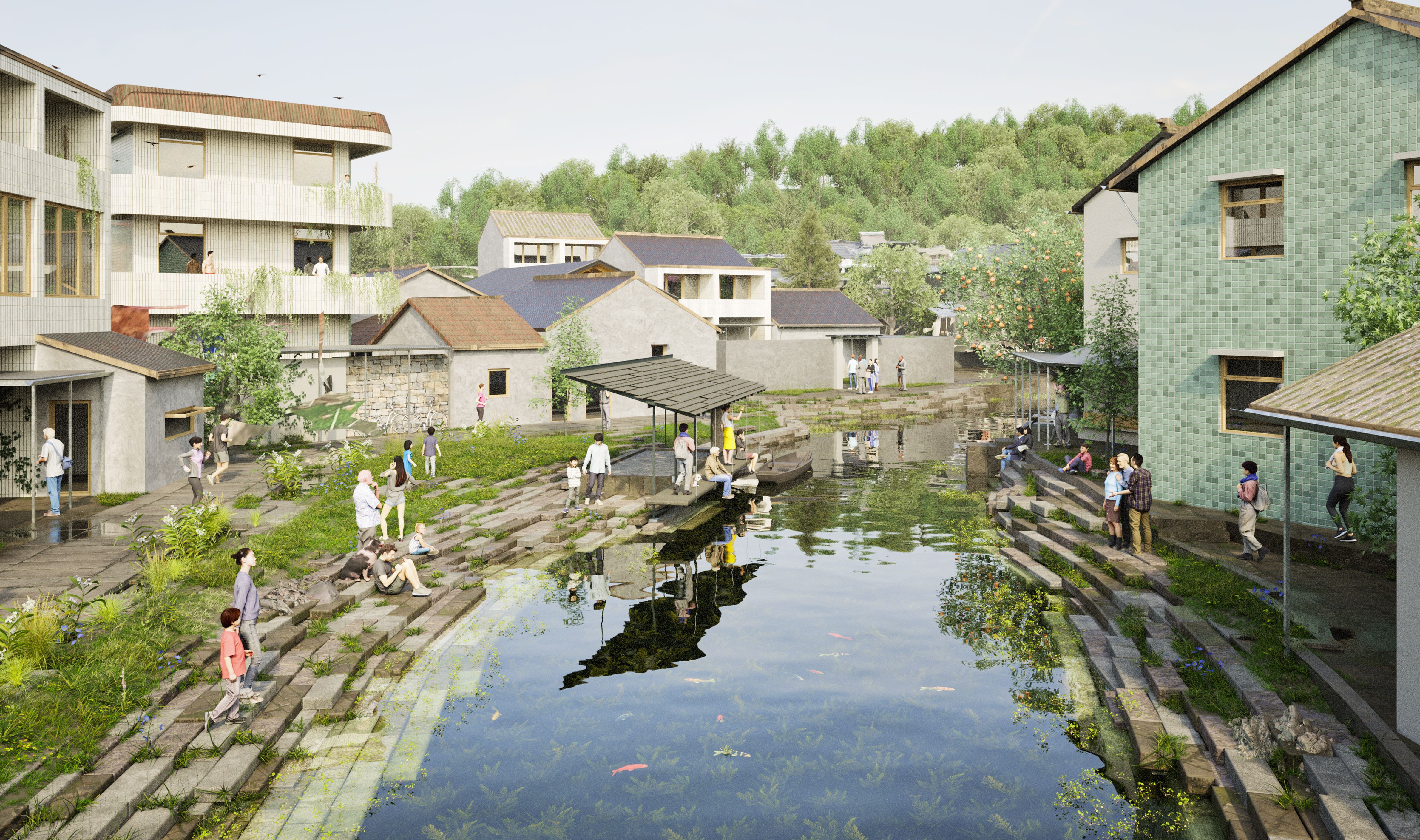
Based on this understanding, the project proposes a simple yet decisive strategy: “Let the water flow in, let the green spread out.” By reintroducing water channels into the formerly sealed shipyard site and restoring permeability along the riverbank, the project reactivates the ecological and social potential of the waterfront. The western entrance is redefined not as a boundary, but as a shared public living room shaped by water.
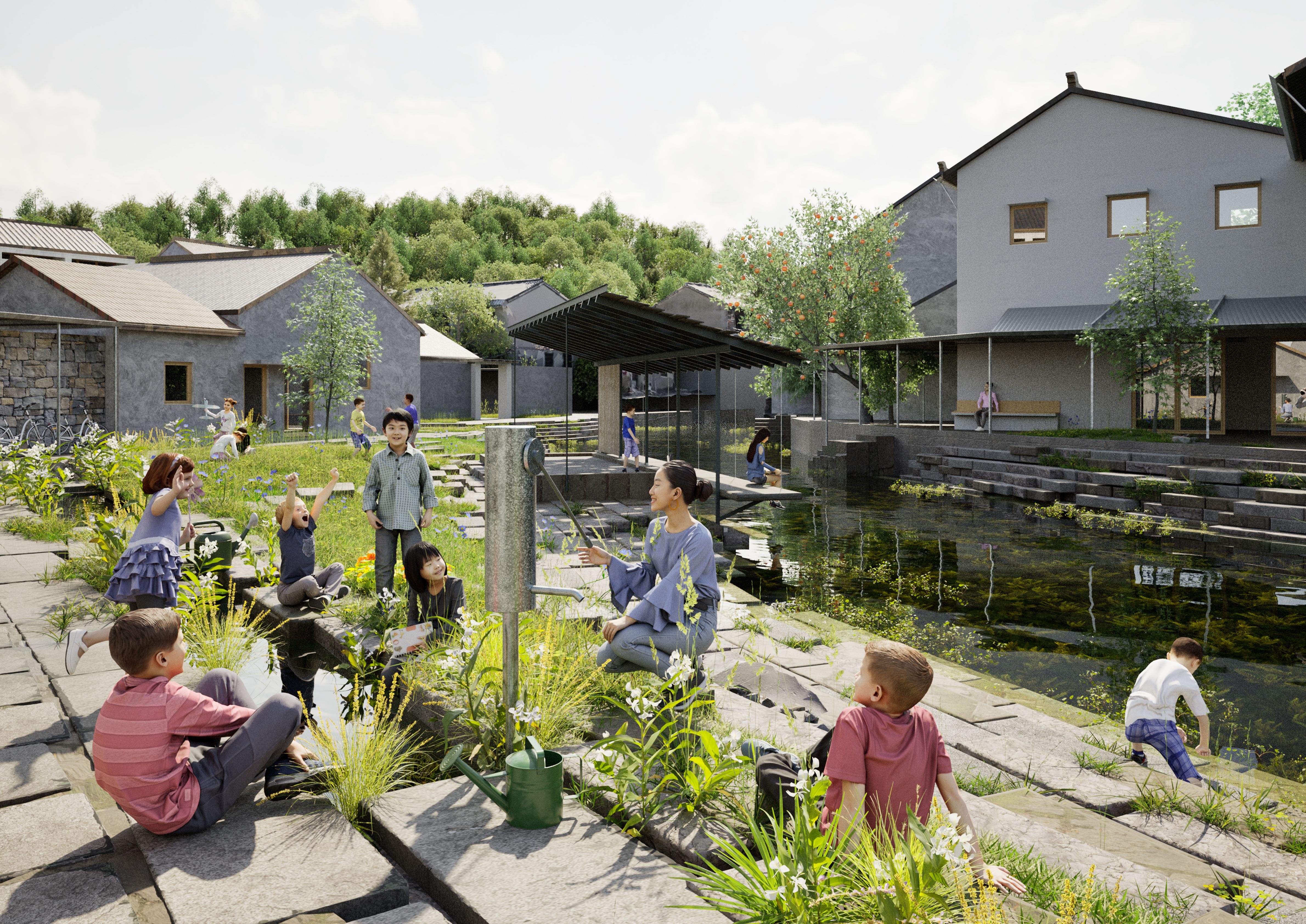
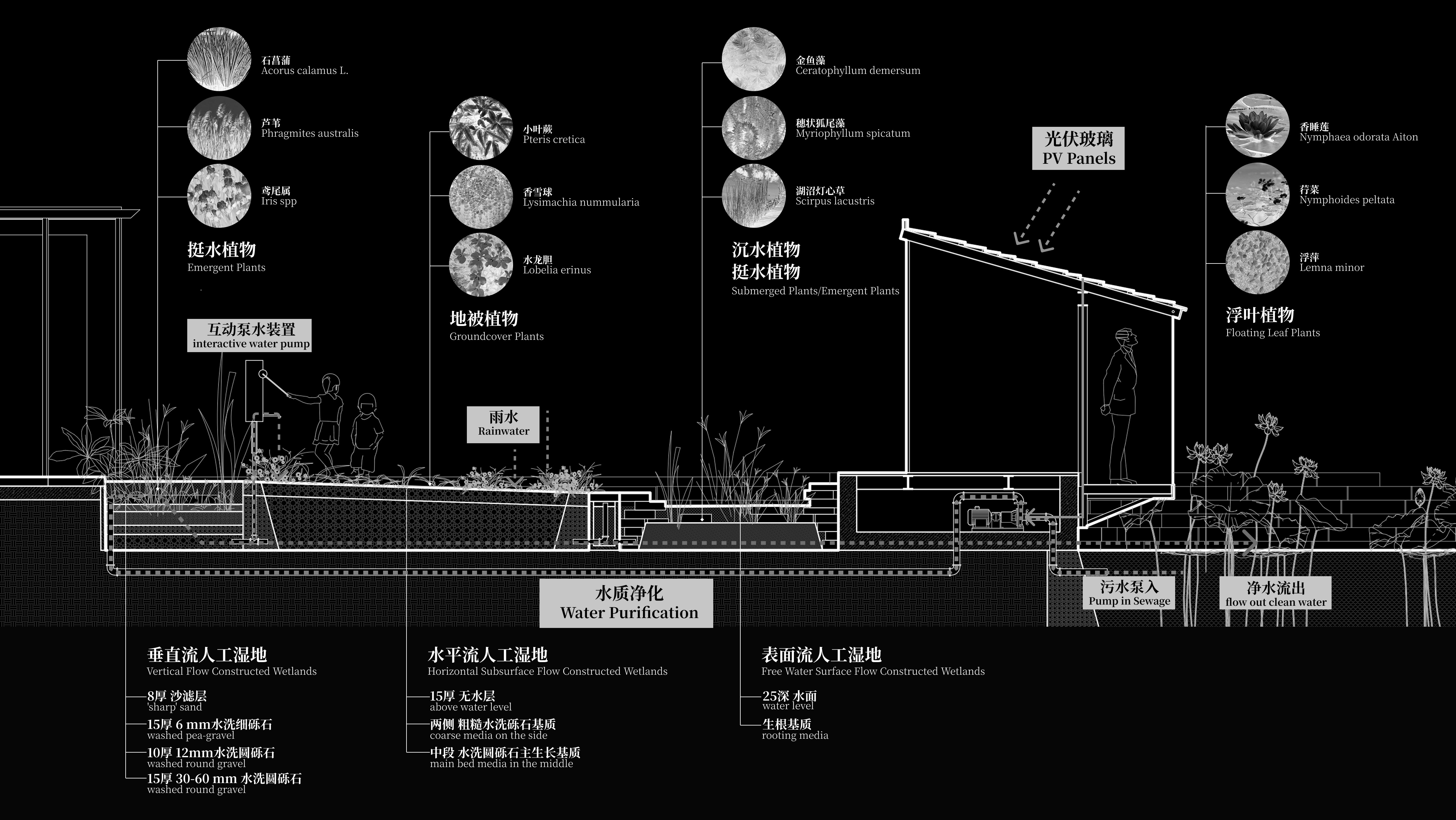
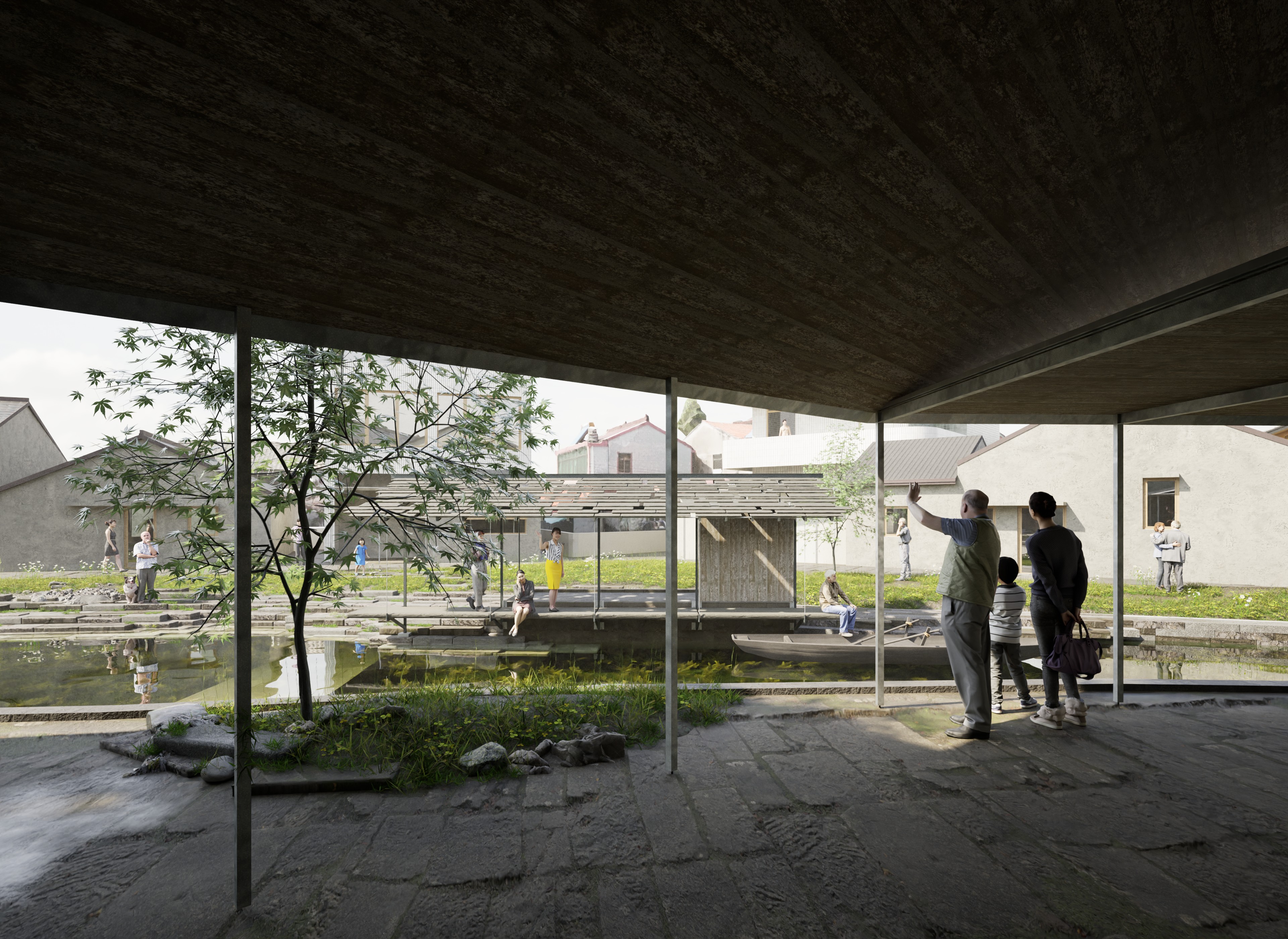
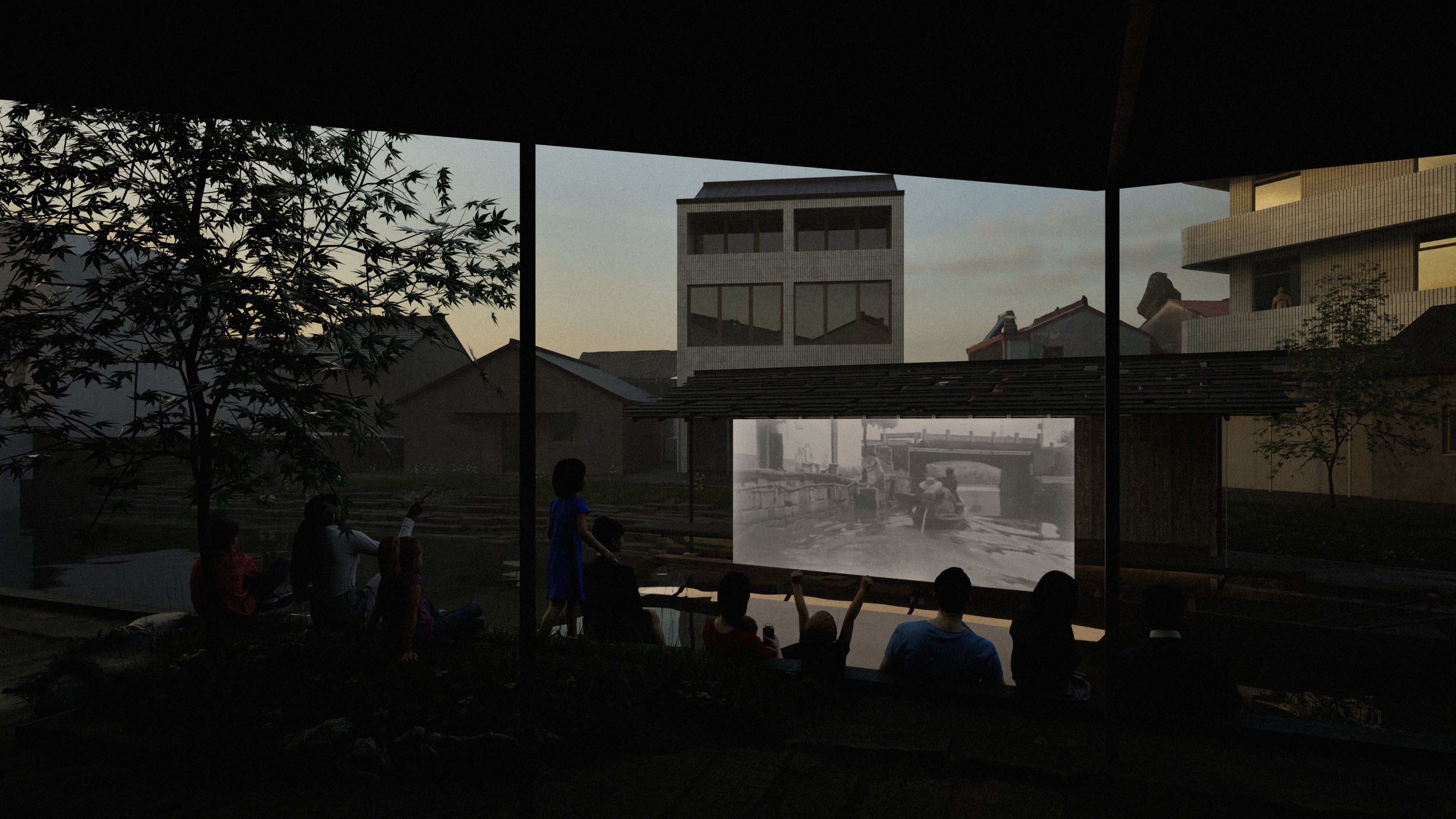
Along the riverbank, the north shore is transformed into a transitional zone between stone-paved paths and the river. Traditional waterside steps are reintroduced and combined with new green spaces, restoring opportunities for residents to approach and engage with the water. Gaps between stone slabs allow water to circulate and be filtered, working together with vegetation layers and integrated purification devices to support natural infiltration and ecological recovery. Above an existing electrical box, a lightweight pavilion—the Pavilion of Flowing Light—is constructed. Its roof combines stone slabs and photovoltaic glass, casting dynamic patterns of light during the day while supplying energy for the waterfront’s purification system. At night, the pavilion can be transformed into a small riverside cinema, encouraging public gathering and lingering by the water.
On the south bank, the project adopts a strategy of gentle replacement. While respecting existing residential structures and minimizing disruption to daily life, incompatible and haphazard extensions are replaced with refined, lightweight steel pavilions. Residents are encouraged to partially open these structures toward the river, allowing private life and public activity to coexist along the waterfront in a restrained and adaptable manner.
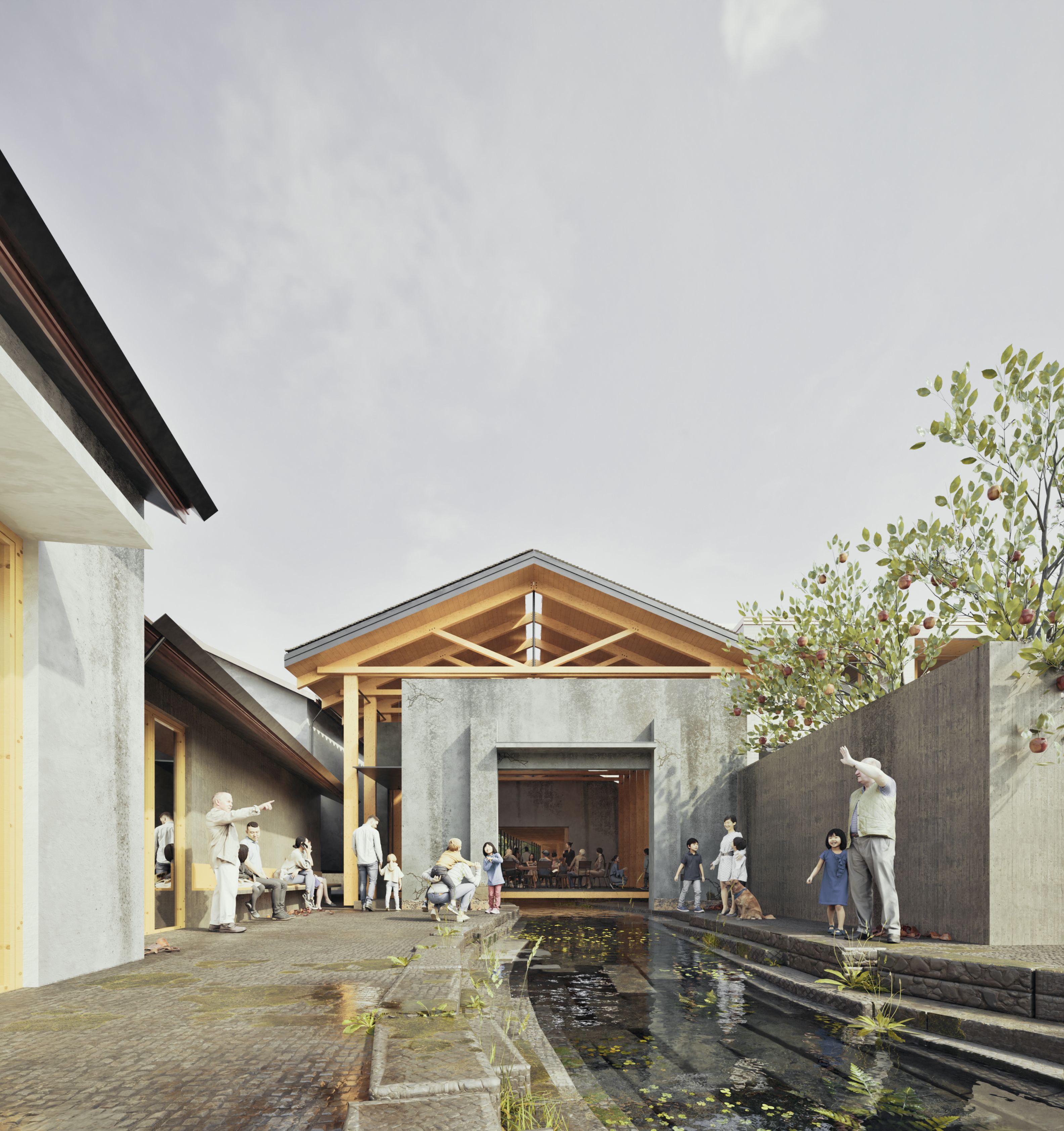
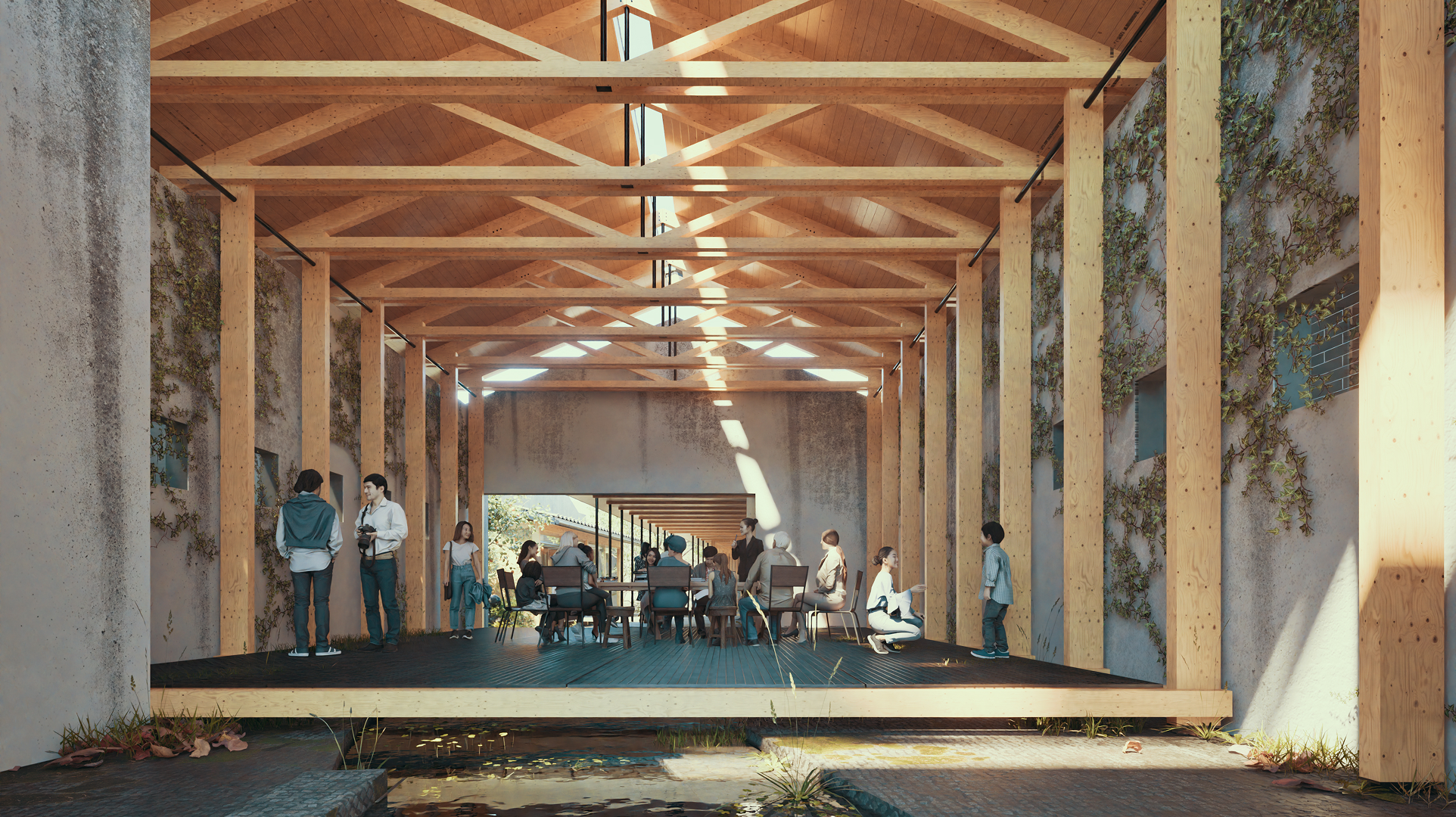
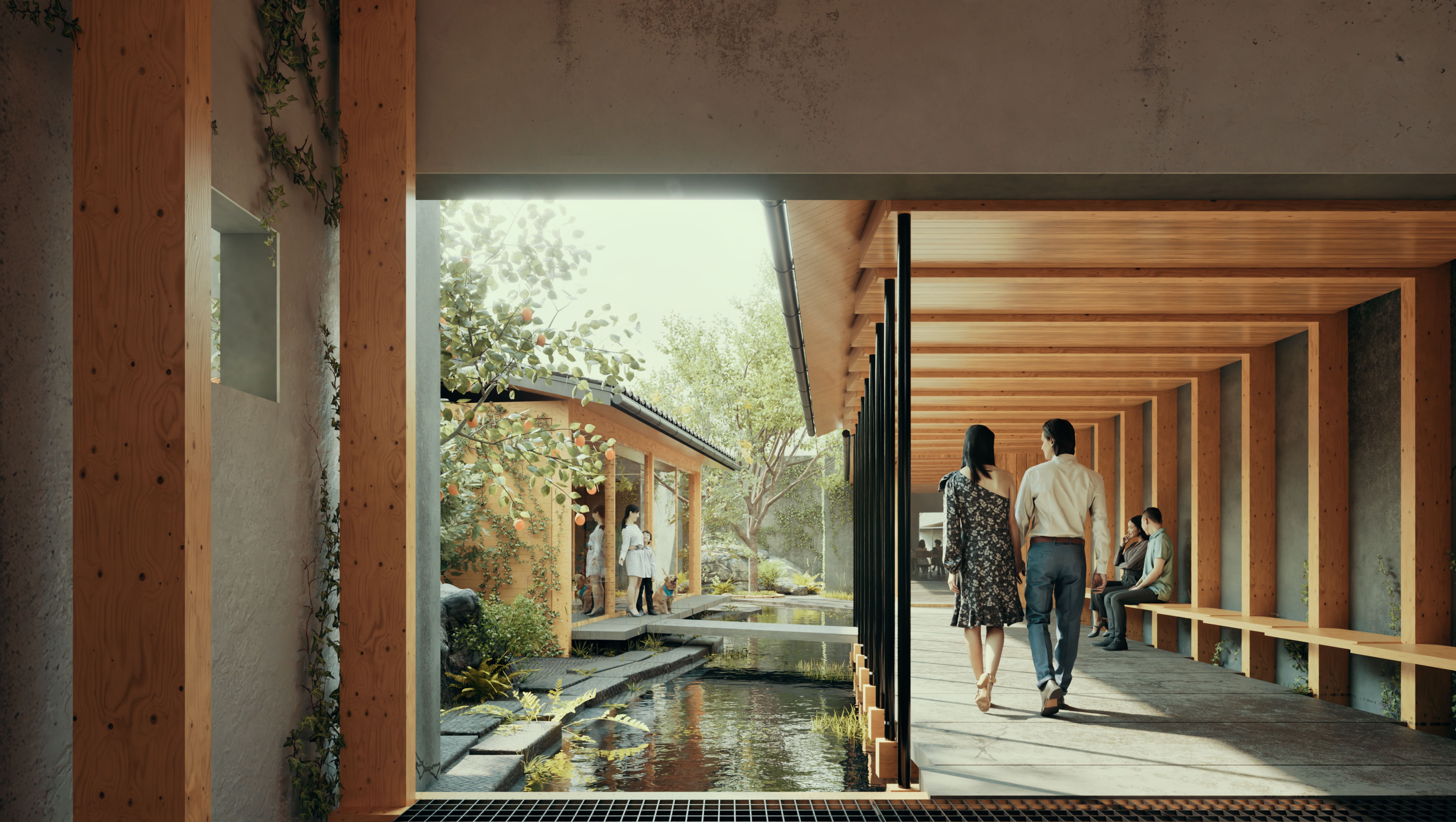
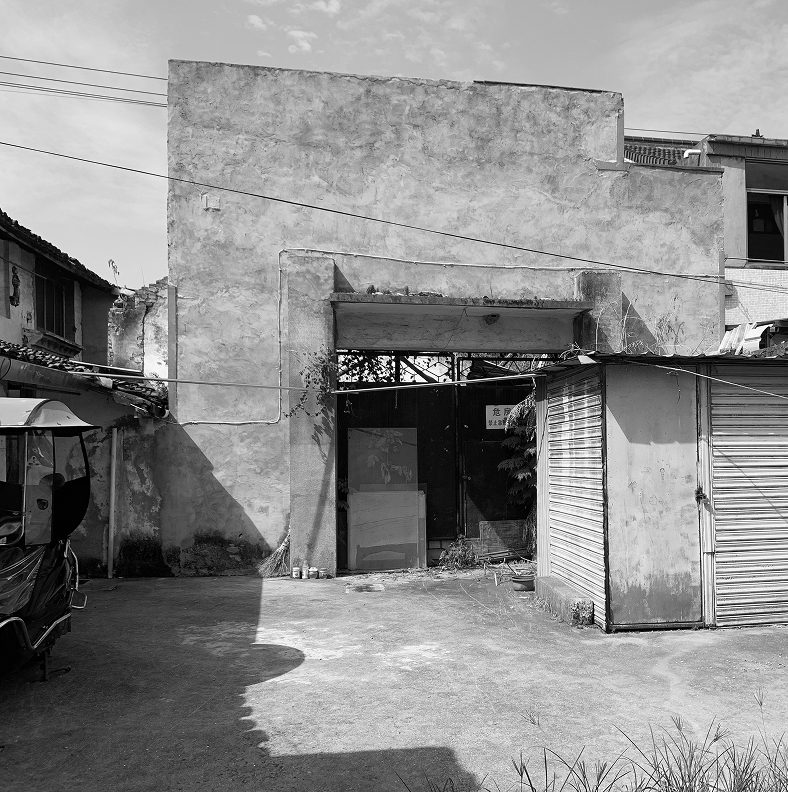
The adaptive reuse of the shipyard ruins continues the central idea of the Living Room of Water. Given that the original structures can no longer be fully verified, the design does not seek a complete reconstruction. Instead, the site is preserved as a “ruin.” New truss structures referencing the original shipyard typology are introduced within the remaining perimeter walls, subtly detached from them to retain the traces of time. The once-sealed shipyard gate is reopened by water rather than by people: water is channeled through the gate into the site, while visitors enter from a smaller side entrance, establishing a spatial sequence in which water precedes human movement.
The water flows through the front courtyard—envisioned as a future public salon for Doumen—and continues toward the rear courtyard, guiding both sightlines and circulation. This sequence creates three distinct spatial relationships between people and water: approaching the water at the bank, inhabiting space above the water, and observing water along corridors. This organization echoes Shaoxing’s historical tradition of structuring space and social activities around flowing water.
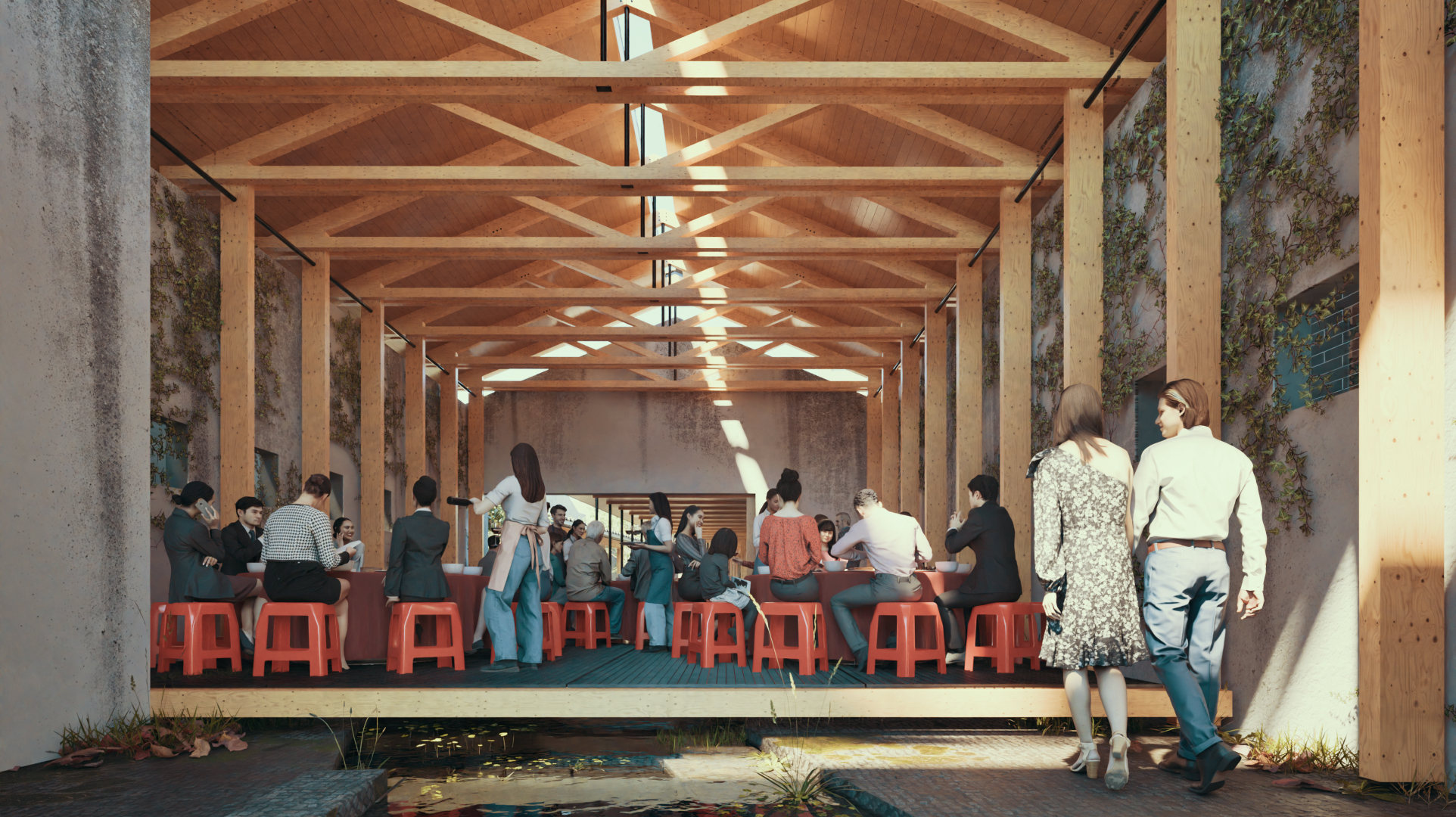
The front courtyard accommodates talks, exhibitions, and public events, with flowing water beneath latticed floors. The rear courtyard hosts tea rooms arranged along the water, providing more intimate settings for gathering and reflection. CLT timber construction is employed throughout the intervention, harmonizing with the naturally regenerated greenery on site.
Through these layered interventions, the Living Room of Water transcends a conventional landscape upgrade. By using water as a spatial and cultural medium, the project re-establishes relationships between infrastructure, daily life, and nature, allowing Doumen’s western entrance to re-enter everyday use as a living, participatory, and continuously evolving public space.
“水的客厅”位于陡亹老街西入口,是连接古镇内部生活与河道系统的重要节点。与其将此处塑造成具有强识别度的门户形象,项目更关注如何回应长期积累的现实问题:设施侵占水岸、日常生活与河流脱节,以及自然系统的退化。这些问题共同指向陡亹临水空间由“生活场所”逐渐退化为“景观背景”的现状。
场地北岸原本具有富有风致的临水石阶,但在多次改造中被水泥硬化面取代;电箱、电井占据岸线,阻断了从桥上眺望老街与河道的视线;洗涤剂等生活排放物直接进入河道,引发水体富营养化。这些变化使陡亹以水为核心的空间秩序和生活方式逐渐消隐。与此同时,船厂遗址内部却在封闭状态下自然生长出大量绿意,提示着另一种可能的空间更新路径。
基于对场地历史与现状的理解,项目提出“让水淌进去,让绿溢出来”的总体策略:通过重新引入水系,激活被封闭的船厂遗址;通过释放绿化与渗透性地表,修复滨水空间的生态与日常使用。西入口不再是边界,而成为水与人的共享客厅。
在河岸改造中,北岸被重塑为石板路与河道之间的过渡带,结合临水石阶与新增绿地,使居民重新获得亲水的可能。石板之间的缝隙允许水体进出,配合底部设置的水质净化装置与植被层,实现过滤与雨水下渗,兼顾生态修复与日常使用。在原有电箱位置之上,项目以轻质结构设置“流光斗转亭”:亭面由石板与光伏玻璃共同构成,既在白天形成光影变化,又为水岸净化系统提供能源,夜间则可转化为临河放映与停留的公共场所。这一构筑物既是设施,也是引导驻留与感知自然的空间节点。
南岸则采取“新药换旧药”的温和更新方式。在尊重原有建筑格局与居民生活的前提下,将与环境显著不协调的加建替换为尺度克制的轻钢小亭,并鼓励其部分向水岸开放,使居住与公共活动在临水界面上形成柔性的共存关系。
船厂遗址的改造延续了“水的客厅”这一核心概念。面对原结构已难以完整考证的现实,设计并未试图复原一个完整的“船厂”,而是保留其作为“遗址”的状态:在残存围墙内引入与原桁架形式相呼应的新结构,并与旧墙体保持轻微脱开,以保存时间的痕迹。原本封闭的船厂大门被转化为引水通道,由水重新“开启”,而人的进入则通过侧门完成,形成水先于人的空间序列。
水系自厂门引入,穿过前院的“古镇沙龙”,再引导视线与动线进入后院,构建出三种人与水的关系:亲水于岸、临水于室、观水于廊。这一组织方式呼应了绍兴地区以水来串联空间与活动的传统。前院作为面向未来的公共客厅,可承载分享会、展览与公共活动;后院沿水布置茶室,提供更具私密性的交流空间。整体结构采用 CLT 木构体系,与场地内自然生长的绿意形成连续而克制的对话。
通过这一系列介入,“水的客厅”不再只是景观更新,而是以水为媒介,重新建立设施、生活与自然之间的关系,使陡亹的西入口重新成为可被使用、可被参与、可持续生长的公共空间。
On the north bank, the original waterside stone steps—once an integral part of everyday life—were replaced by hardened concrete surfaces through repeated renovations. Electrical boxes and service shafts occupy the river edge, blocking views and interrupting pedestrian continuity, while household detergents discharged directly into the river have caused eutrophication. In contrast, the enclosed shipyard ruins have quietly accumulated spontaneous greenery, revealing an alternative trajectory of coexistence between water, nature, and time.
Based on this understanding, the project proposes a simple yet decisive strategy: “Let the water flow in, let the green spread out.” By reintroducing water channels into the formerly sealed shipyard site and restoring permeability along the riverbank, the project reactivates the ecological and social potential of the waterfront. The western entrance is redefined not as a boundary, but as a shared public living room shaped by water.
Along the riverbank, the north shore is transformed into a transitional zone between stone-paved paths and the river. Traditional waterside steps are reintroduced and combined with new green spaces, restoring opportunities for residents to approach and engage with the water. Gaps between stone slabs allow water to circulate and be filtered, working together with vegetation layers and integrated purification devices to support natural infiltration and ecological recovery. Above an existing electrical box, a lightweight pavilion—the Pavilion of Flowing Light—is constructed. Its roof combines stone slabs and photovoltaic glass, casting dynamic patterns of light during the day while supplying energy for the waterfront’s purification system. At night, the pavilion can be transformed into a small riverside cinema, encouraging public gathering and lingering by the water.
On the south bank, the project adopts a strategy of gentle replacement. While respecting existing residential structures and minimizing disruption to daily life, incompatible and haphazard extensions are replaced with refined, lightweight steel pavilions. Residents are encouraged to partially open these structures toward the river, allowing private life and public activity to coexist along the waterfront in a restrained and adaptable manner.
The adaptive reuse of the shipyard ruins continues the central idea of the Living Room of Water. Given that the original structures can no longer be fully verified, the design does not seek a complete reconstruction. Instead, the site is preserved as a “ruin.” New truss structures referencing the original shipyard typology are introduced within the remaining perimeter walls, subtly detached from them to retain the traces of time. The once-sealed shipyard gate is reopened by water rather than by people: water is channeled through the gate into the site, while visitors enter from a smaller side entrance, establishing a spatial sequence in which water precedes human movement.
The water flows through the front courtyard—envisioned as a future public salon for Doumen—and continues toward the rear courtyard, guiding both sightlines and circulation. This sequence creates three distinct spatial relationships between people and water: approaching the water at the bank, inhabiting space above the water, and observing water along corridors. This organization echoes Shaoxing’s historical tradition of structuring space and social activities around flowing water.
The front courtyard accommodates talks, exhibitions, and public events, with flowing water beneath latticed floors. The rear courtyard hosts tea rooms arranged along the water, providing more intimate settings for gathering and reflection. CLT timber construction is employed throughout the intervention, harmonizing with the naturally regenerated greenery on site.
Through these layered interventions, the Living Room of Water transcends a conventional landscape upgrade. By using water as a spatial and cultural medium, the project re-establishes relationships between infrastructure, daily life, and nature, allowing Doumen’s western entrance to re-enter everyday use as a living, participatory, and continuously evolving public space.
“水的客厅”位于陡亹老街西入口,是连接古镇内部生活与河道系统的重要节点。与其将此处塑造成具有强识别度的门户形象,项目更关注如何回应长期积累的现实问题:设施侵占水岸、日常生活与河流脱节,以及自然系统的退化。这些问题共同指向陡亹临水空间由“生活场所”逐渐退化为“景观背景”的现状。
场地北岸原本具有富有风致的临水石阶,但在多次改造中被水泥硬化面取代;电箱、电井占据岸线,阻断了从桥上眺望老街与河道的视线;洗涤剂等生活排放物直接进入河道,引发水体富营养化。这些变化使陡亹以水为核心的空间秩序和生活方式逐渐消隐。与此同时,船厂遗址内部却在封闭状态下自然生长出大量绿意,提示着另一种可能的空间更新路径。
基于对场地历史与现状的理解,项目提出“让水淌进去,让绿溢出来”的总体策略:通过重新引入水系,激活被封闭的船厂遗址;通过释放绿化与渗透性地表,修复滨水空间的生态与日常使用。西入口不再是边界,而成为水与人的共享客厅。
在河岸改造中,北岸被重塑为石板路与河道之间的过渡带,结合临水石阶与新增绿地,使居民重新获得亲水的可能。石板之间的缝隙允许水体进出,配合底部设置的水质净化装置与植被层,实现过滤与雨水下渗,兼顾生态修复与日常使用。在原有电箱位置之上,项目以轻质结构设置“流光斗转亭”:亭面由石板与光伏玻璃共同构成,既在白天形成光影变化,又为水岸净化系统提供能源,夜间则可转化为临河放映与停留的公共场所。这一构筑物既是设施,也是引导驻留与感知自然的空间节点。
南岸则采取“新药换旧药”的温和更新方式。在尊重原有建筑格局与居民生活的前提下,将与环境显著不协调的加建替换为尺度克制的轻钢小亭,并鼓励其部分向水岸开放,使居住与公共活动在临水界面上形成柔性的共存关系。
船厂遗址的改造延续了“水的客厅”这一核心概念。面对原结构已难以完整考证的现实,设计并未试图复原一个完整的“船厂”,而是保留其作为“遗址”的状态:在残存围墙内引入与原桁架形式相呼应的新结构,并与旧墙体保持轻微脱开,以保存时间的痕迹。原本封闭的船厂大门被转化为引水通道,由水重新“开启”,而人的进入则通过侧门完成,形成水先于人的空间序列。
水系自厂门引入,穿过前院的“古镇沙龙”,再引导视线与动线进入后院,构建出三种人与水的关系:亲水于岸、临水于室、观水于廊。这一组织方式呼应了绍兴地区以水来串联空间与活动的传统。前院作为面向未来的公共客厅,可承载分享会、展览与公共活动;后院沿水布置茶室,提供更具私密性的交流空间。整体结构采用 CLT 木构体系,与场地内自然生长的绿意形成连续而克制的对话。
通过这一系列介入,“水的客厅”不再只是景观更新,而是以水为媒介,重新建立设施、生活与自然之间的关系,使陡亹的西入口重新成为可被使用、可被参与、可持续生长的公共空间。
Location: Ningbo, Zhejiang, China
地理位置:中国浙江省宁波市
Status: Design Development
项目状态:深化设计
Duration: 2024 - 2025
项目周期:2024 - 2025
Partner Architect: Practice on Earth
合作方:猜一建筑
Team: Zi Meng, Yangyang Liu, Yifei Feng, Yinuo Qiu
团队:孟子,刘杨洋,冯奕斐,邱一诺
地理位置:中国浙江省宁波市
Status: Design Development
项目状态:深化设计
Duration: 2024 - 2025
项目周期:2024 - 2025
Partner Architect: Practice on Earth
合作方:猜一建筑
Team: Zi Meng, Yangyang Liu, Yifei Feng, Yinuo Qiu
团队:孟子,刘杨洋,冯奕斐,邱一诺